

If you’ve ever searched for a workout routine for women and closed the tab five minutes later, overwhelmed by conflicting advice, you’re not alone. Somewhere between “just walk more” and “train like an athlete,” most women end up with no clear starting point at all.
Here’s the good news: an effective routine doesn’t need to be extreme, complicated, or built around someone else’s schedule. It needs to fit your life — whether that means a full gym membership, a living room and a set of resistance bands, or twenty minutes squeezed in before the kids wake up.
This guide walks through it all: weekly schedules, full-body and targeted workouts, home and gym versions, and how to adjust everything based on your goals. No guaranteed transformations, no extreme diets — just a practical plan you can actually follow.
Table of Contents
- What Makes a Good Workout Routine for Women?
- Benefits of Following a Consistent Workout Routine
- How Many Days a Week Should Women Work Out?
- Best Weekly Workout Routine for Women
- Full-Body Workout Routine for Women
- Lower-Body Workout Routine for Women
- Upper-Body Workout Routine for Women
- Core Workout Routine for Women
- Cardio Workout Routine for Women
- Workout Routine for Women at Home
- Gym Workout Routine for Women
- Beginner Workout Routine for Women
- Workout Routine for Women Based on Different Goals
- Warm-Up, Cool-Down, and Progression
- Common Mistakes, Nutrition, and Safety
- Staying Consistent
- FAQs
What Makes a Good Workout Routine for Women?
Strip away the marketing, and a good routine really comes down to a handful of ingredients working together:
- Strength training, to build and hold onto muscle and support long-term bone health
- Cardiovascular exercise, for heart health and everyday stamina
- Mobility and flexibility work, so your joints keep moving the way they’re supposed to
- Core training, for stability and posture, not just aesthetics
- Rest and recovery, treated as part of the plan rather than an afterthought
- Gradual progression, so your body has time to adapt
- Enjoyment, because a routine you dread rarely lasts
- Adaptability, so it can flex around your schedule and goals
Women don’t need a completely separate approach to exercise from men — the underlying principles of strength and cardio training are the same. What tends to differ is context: your experience level, recovery needs, injury history, pregnancy or postpartum status, and personal preferences. A good routine is shaped around you, not a one-size-fits-all template pulled from a fitness influencer’s feed.
“Fitness isn’t about becoming someone else. It’s about becoming stronger at being you — one consistent week at a time.”
Benefits of Following a Consistent Workout Routine
The payoff from sticking with a routine goes well beyond how you look:
- Improved muscular strength and endurance
- Better cardiovascular health
- More stable energy through the day
- Improved mood and stress management
- Better balance and coordination
- Stronger bones from regular weight-bearing movement
- Greater mobility in everyday tasks
- More confidence doing physical things — carrying groceries, playing with your kids, hiking with friends
- Support for a healthy body composition over time
- Better functional fitness overall
Results genuinely vary from person to person, and it’s worth being honest about that upfront. Consistent training is a long game. Often, the first things you notice are better energy and mood — the physical changes tend to follow later, and quietly.
How Many Days a Week Should Women Work Out?
There’s no single magic number here — it depends on where you’re starting from and how much recovery you need.
| Fitness Level | Recommended Schedule |
|---|---|
| Beginner | 3 structured workouts per week, plus light daily activity like walking |
| Intermediate | 4–5 training days, combining strength and cardio |
| Advanced | 5–6 training days with planned recovery and varied intensity |
A balanced week generally includes:
- Strength training 2–4 times per week across major muscle groups
- Cardio 2–3 times per week, mixing steady and higher-intensity sessions
- Mobility work, ideally most days, even if it’s just five minutes
- At least one full rest day
- Active recovery — easy walking, light stretching — on lighter days
General physical activity guidelines commonly point to regular aerobic activity alongside muscle-strengthening exercise for most adults. But guidelines are a starting reference, not a rulebook — the right frequency for you is the one you can maintain without burning out or getting hurt.
Best Weekly Workout Routine for Women
Here’s a balanced weekly template that blends strength, cardio, and recovery:
| Day | Workout |
|---|---|
| Monday | Lower-Body Strength |
| Tuesday | Upper-Body Strength and Core |
| Wednesday | Moderate Cardio or Active Recovery |
| Thursday | Full-Body Strength |
| Friday | Rest or Mobility |
| Saturday | Cardio, Conditioning, or Recreational Activity |
| Sunday | Rest |
Making it fit your week:
- New to exercise or short on time? Trim it to three days — say, Monday, Wednesday, and Saturday — using full-body strength sessions and resting or walking on the days between.
- Juggling a packed schedule? Shorten sessions to 20–30 minutes and lean on full-body days instead of splitting muscle groups across multiple sessions.
- Training regularly already? Add a fifth or sixth day with more targeted splits, but keep at least one full rest day untouched.
Full-Body Workout Routine for Women
Great for beginners, and easy to scale up for intermediate lifters by adding sets or resistance.
| Exercise | Main Muscles | Sets | Reps/Time | Rest | Beginner Modification | Progression |
|---|---|---|---|---|---|---|
| Squats | Quads, glutes | 2–3 | 8–12 | 60–90s | Chair squats | Add dumbbells |
| Romanian Deadlifts | Hamstrings, glutes | 2–3 | 8–12 | 60–90s | Bodyweight hip hinge | Add dumbbells or barbell |
| Push-Ups | Chest, shoulders, triceps | 2–3 | 6–12 | 60s | Incline push-ups on a counter | Full push-ups, add weight vest |
| One-Arm Dumbbell Rows | Back, biceps | 2–3 | 8–12 per side | 60s | Lighter weight, slower tempo | Increase weight |
| Glute Bridges/Hip Thrusts | Glutes, hamstrings | 2–3 | 10–15 | 60s | Bodyweight bridges | Add barbell or band |
| Shoulder Press | Shoulders, triceps | 2–3 | 8–12 | 60–90s | Light dumbbells, seated | Increase weight |
| Planks or Dead Bugs | Core | 2–3 | 20–40s or 8–10 per side | 45–60s | Knees down or shorter hold | Longer hold, add movement |
| Loaded Carries (optional) | Core, grip, shoulders | 2 | 20–30m walk | 60s | Light bag or dumbbells | Heavier load, longer distance |
Run through this 2–3 times a week on non-consecutive days, leaving at least a day between sessions that hit the same muscles.
Lower-Body Workout Routine for Women
This one targets glutes, quads, hamstrings, calves, and hip stabilizers — the muscles doing most of the work in daily life.
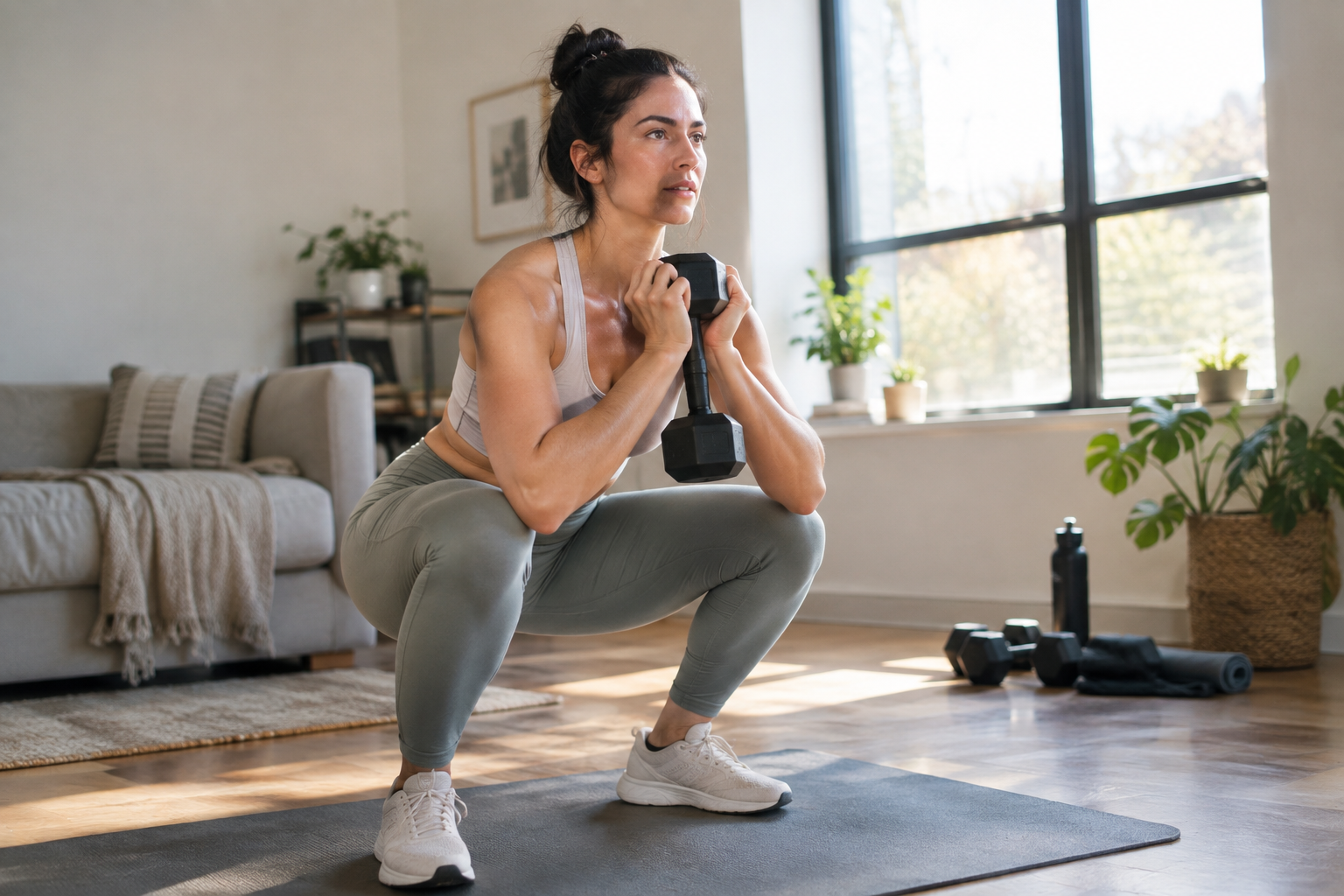
- Goblet Squats – 3 sets of 10–12; chest up, knees tracking over toes; beginners can reduce depth
- Reverse Lunges – 3 sets of 8–10 per leg; step back with control; hold a wall or chair for balance if needed
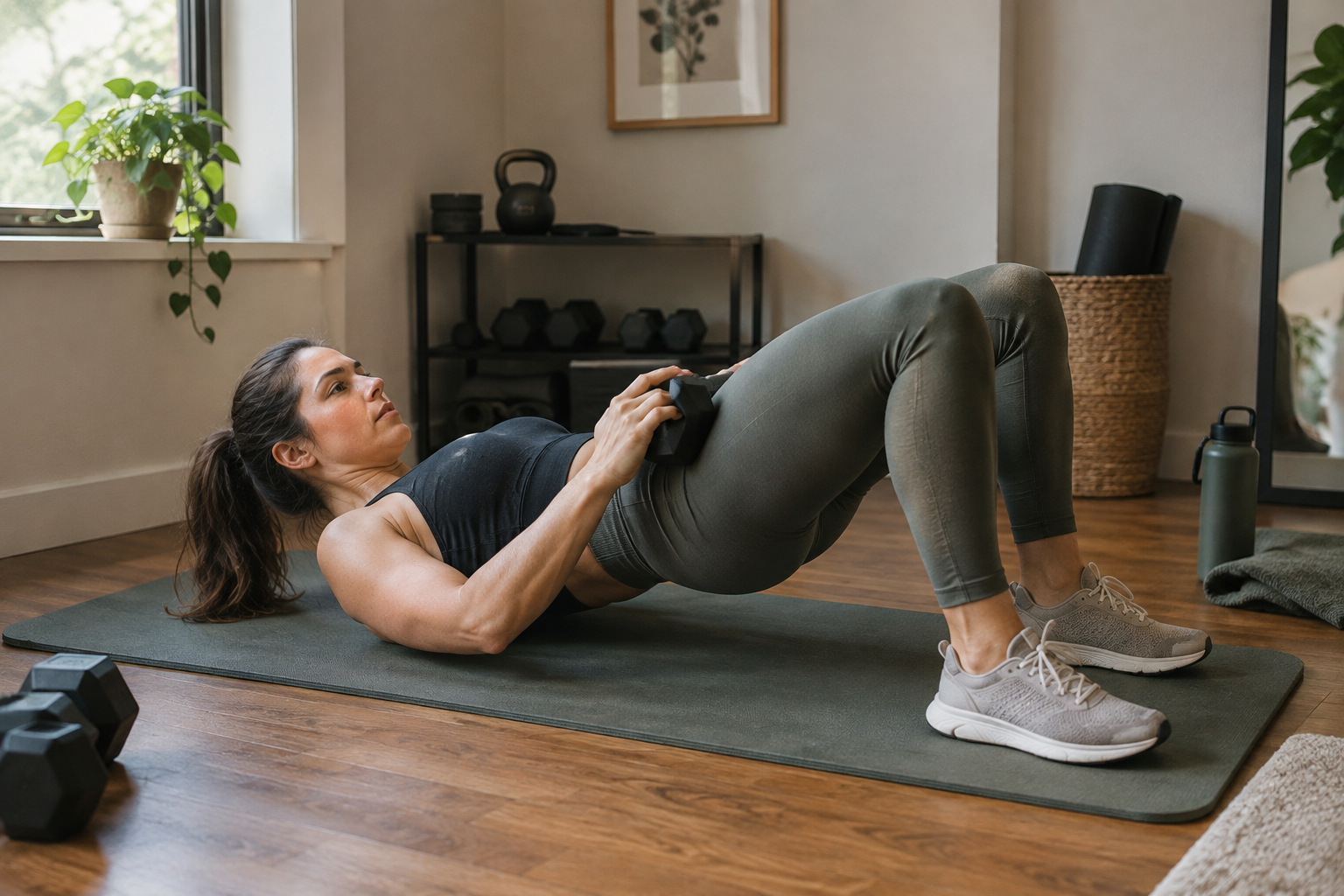
- Hip Thrusts – 3 sets of 10–15; squeeze at the top; start bodyweight-only if you’re new to the movement
- Romanian Deadlifts – 3 sets of 8–12; hinge at the hips, slight knee bend, flat back
- Step-Ups – 3 sets of 8–10 per leg; use a sturdy bench, lower the step height if needed
- Calf Raises – 2–3 sets of 12–15; hold onto a wall for balance
- Banded Lateral Walks – 2 sets of 10–12 steps per side; keep steady tension in the band
Lower-body strength isn’t just about how your legs look — it’s what gets you up stairs without thinking twice and keeps you steady on uneven ground.
Upper-Body Workout Routine for Women
A mix of pushing and pulling movements to train chest, back, shoulders, and arms evenly.
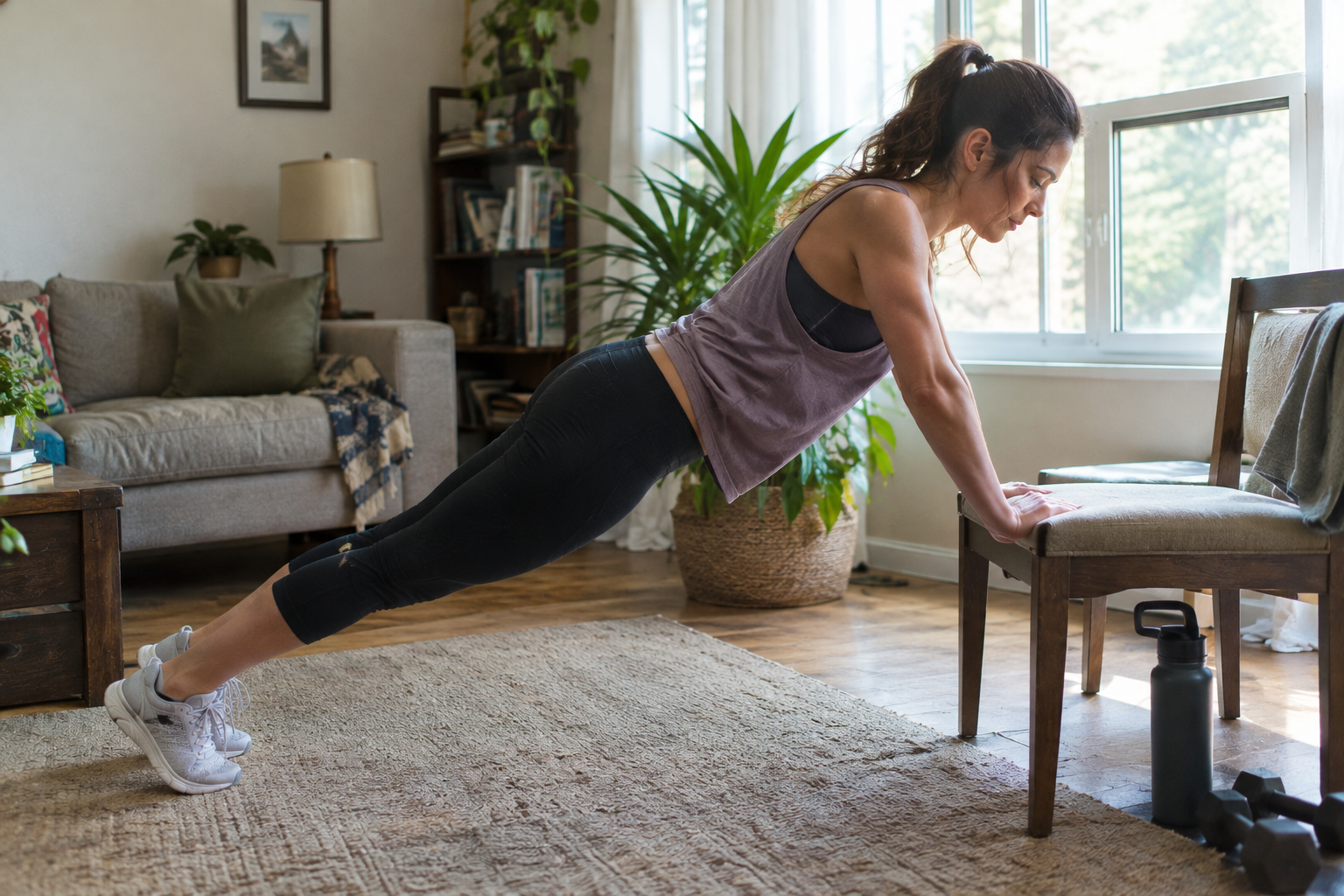
- Incline Push-Ups – 3 sets of 8–12
- Dumbbell Chest Press – 3 sets of 10–12
- Seated Cable Row or Resistance-Band Row – 3 sets of 10–12
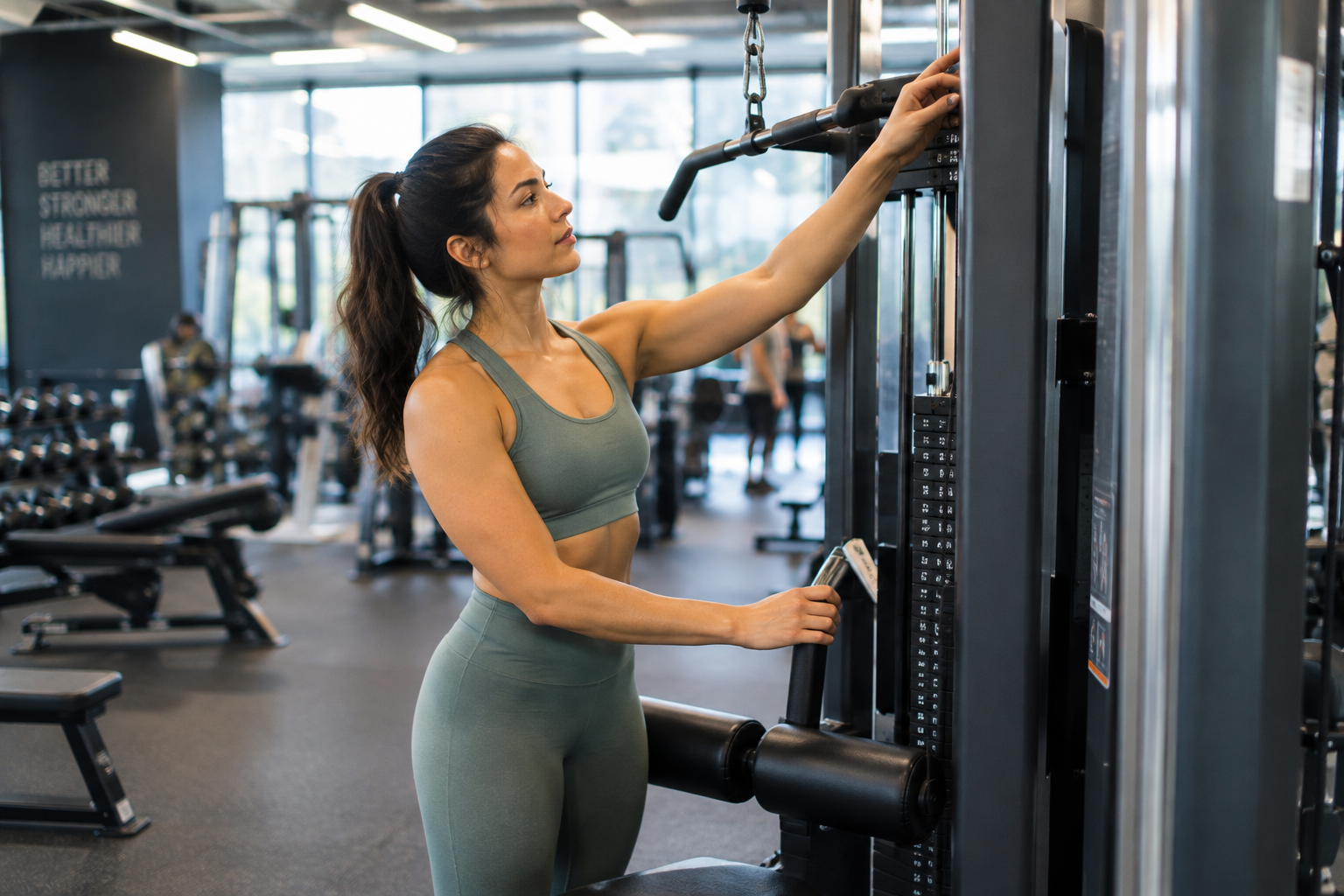
- Lat Pulldown – 3 sets of 10–12
- Dumbbell Shoulder Press – 3 sets of 8–10
- Lateral Raises – 2–3 sets of 12–15
- Biceps Curls – 2 sets of 10–12
- Triceps Extensions – 2 sets of 10–12
Pick a weight that makes the last two or three reps of each set genuinely hard, but still controlled. And don’t skip the pulling exercises (rows, pulldowns) in favor of just pressing — that balance matters for shoulder health and posture over time.
Core Workout Routine for Women
Core training isn’t really about visible abs — it’s about stability, posture, and control that carries into everything else you do.
- Dead Bugs – 3 sets of 8–10 per side
- Bird Dogs – 3 sets of 8–10 per side
- Front Planks – 3 sets of 20–40 seconds
- Side Planks – 2–3 sets of 15–30 seconds per side
- Pallof Presses – 2–3 sets of 10–12 per side
- Reverse Crunches – 2–3 sets of 10–15
- Suitcase Carries – 2 sets of 20–30 meters per side
Worth saying clearly: core exercises alone won’t reduce belly fat in a targeted way. Fat loss in any one area comes down to overall energy balance, not which muscle you’re training. Core work builds strength and control — that’s its job.
Cardio Workout Routine for Women

Cardio isn’t one thing — it spans a spectrum from easy walks to all-out intervals, and the right mix depends on your fitness level and what you’re training for.
Low-intensity steady-state: brisk walking, easy cycling, or swimming for 30–45 minutes, a few times a week. A solid entry point if you’re just starting out.
Moderate-intensity cardio: jogging, rowing, elliptical training, or dance workouts for 20–40 minutes, 2–3 times weekly.
High-intensity interval training (HIIT): short, intense bursts (think sprints or fast cycling) followed by recovery, totaling 15–25 minutes, once or twice a week once you’ve built some base fitness.
Just starting out? Two to three sessions of 15–20 minutes of walking or light cycling, building duration gradually from there.
Somewhere in the middle? Pair two moderate-intensity sessions with one HIIT session per week.
Been training a while? Mix longer steady-state work with one or two HIIT sessions, adjusting based on how recovered you feel.
Small, steady increases in duration or intensity beat big jumps — your joints and your motivation will both thank you.
Workout Routine for Women at Home
No gym, no problem. This circuit needs little to no equipment and works well when time is tight.
Home Circuit (repeat 2–4 rounds):
- Bodyweight Squats – 12–15 reps
- Reverse Lunges – 10 per leg
- Incline Push-Ups (hands on a sturdy surface) – 8–12 reps
- Glute Bridges – 15 reps
- Backpack Rows (using a loaded backpack, bent over) – 12 reps
- Mountain Climbers or Marching in Place – 30–40 seconds
- Plank – 20–30 seconds
Format: 40 seconds of work, 20 seconds of rest per exercise, with 1–2 minutes between rounds.
New to this? Stick to 1–2 rounds and give yourself longer rest.
Ready for more? Add resistance bands or dumbbells, increase the backpack weight, or add another round.
“You don’t need a gym membership to get stronger. You need consistency, a little creativity, and a few square feet of floor space.”
Gym Workout Routine for Women
Gyms make it simple to adjust resistance precisely and target specific muscles — worth using if you have access.
Sample Gym Routine:
- Treadmill or Stationary Bike Warm-Up – 5–10 minutes
- Leg Press – 3 sets of 10–12
- Lat Pulldown – 3 sets of 10–12
- Seated Row – 3 sets of 10–12
- Dumbbell Bench Press – 3 sets of 10–12
- Cable or Machine Shoulder Press – 2–3 sets of 10–12
- Hip Thrust Machine or Glute Bridge – 3 sets of 12–15
- Cable Core Exercise (like a cable crunch or woodchopper) – 2–3 sets of 12–15
Feeling out of place at the gym? A few things help:
- Start lighter than you think you need to, so you can learn the movement before adding load
- Adjust machine seat height and range before your first rep, not after
- Track your sessions so progress is visible over weeks, not guesswork
- Ask gym staff to show you a machine — most people genuinely don’t mind, and it’s what they’re there for
Beginner Workout Routine for Women
A simple three-day starting point if structured exercise is new territory:
- Day 1: Full-body strength (use the full-body routine above, 1–2 sets per exercise)
- Day 2: Walking and mobility (20–30 minutes of easy walking, plus stretching)
- Day 3: Full-body strength (repeat Day 1)
- Other days: Optional light activity — a walk, some stretching, whatever feels good
Start with one or two sets and lighter resistance than you think you need. As movements start feeling easier, add one thing at a time — a rep, a set, or slightly more weight — not all three at once.
Workout Routine for Women Based on Different Goals
General Fitness: A balanced mix of strength, cardio, mobility, and recovery, following the weekly template above.
Building Muscle: Prioritize resistance training with enough volume per muscle group, apply progressive overload over time, support it with adequate protein, and give muscles time to recover between sessions.
Improving Strength: Focus on controlled compound movements — squats, deadlifts, presses, rows — with appropriate resistance, longer rest periods (90 seconds to 2+ minutes), and close attention to technique.
Supporting Fat Loss: Fat loss comes down to overall energy balance, nutrition, activity, sleep, and consistency — not any single workout. There’s no way to guarantee fast results or target fat loss in one specific area, no matter what a headline promises.
Improving Endurance: Build cardio duration, frequency, and intensity gradually over weeks, not all at once.
Improving Mobility: Include dynamic warm-ups, controlled range-of-motion work, regular stretching, and simply moving often throughout the day.
How to Warm Up Before a Workout
Give yourself 5–10 minutes to prepare — it reduces injury risk and makes the workout itself feel better:
- Easy walking or cycling – 2–3 minutes
- Arm circles – 30 seconds each direction
- Bodyweight squats – 10 reps
- Hip hinges – 10 reps
- Walking lunges – 8–10 per leg
- Band pull-aparts – 10–15 reps
- Light practice sets of your first exercise with reduced weight
A general warm-up raises your heart rate and body temperature. Exercise-specific preparation — like a lighter practice set — primes the exact movement pattern and muscles you’re about to load.
How to Cool Down and Recover
- Ease off intensity in the last few minutes rather than stopping abruptly
- Add gentle mobility work or stretching afterward
- Stay hydrated throughout the day, not just around your workout
- Eat balanced meals with enough protein to support recovery
- Prioritize sleep — a lot of the actual repair happens overnight
- Take scheduled rest days seriously; they’re part of the plan, not a break from it
- If you feel restless on a rest day, light walking or easy stretching is fine
- Expect some muscle soreness after new or harder workouts, but sharp, severe, or persistent pain isn’t normal — that’s worth getting checked by a professional
How to Progress Your Workout Routine
Progressive overload just means gradually asking a bit more of your body so it keeps adapting. You can do that by:
- Adding one or two reps to a set
- Increasing resistance slightly
- Adding an extra set
- Improving technique and control
- Increasing range of motion
- Trimming rest between sets a little
- Increasing total workout duration
- Choosing a more challenging exercise variation
Change one variable at a time. Jumping several at once is how people end up sidelined by an overuse injury instead of steadily improving.
How Long Should a Workout Routine for Women Last?
- Beginners: 20–40 minutes per session
- Intermediate exercisers: 30–60 minutes per session
- Advanced training: 45–75 minutes depending on the session’s focus
A focused 30-minute workout will get you further than a distracted 90-minute one. Quality and consistency matter more than the clock.
Common Workout Mistakes Women Should Avoid
- Doing too much too soon, before your body has had time to adapt
- Focusing only on cardio and skipping strength training entirely
- Avoiding strength training out of fear of “getting bulky” — meaningful muscle growth takes deliberate, sustained effort over a long time, not a few weeks of lifting
- Sacrificing form to lift heavier
- Copying an advanced program before building a base level of fitness
- Skipping the warm-up
- Treating rest days as optional
- Switching programs every week or two, never giving one a real chance to work
- Pushing through sharp or unusual pain
- Comparing your progress to someone else’s highlight reel
- Judging progress by the scale alone
- Pairing training with an extreme or overly restrictive diet
Setbacks happen to everyone — missed sessions, plateaus, off weeks. None of that erases the progress you’ve already made.
Nutrition Tips to Support a Workout Routine
- Include protein-rich foods — lean meats, eggs, dairy, legumes, or tofu — to support muscle repair
- Eat enough carbohydrates to fuel your training and daily energy needs
- Include healthy fats from sources like nuts, seeds, olive oil, and avocado
- Get a variety of fruits and vegetables for fiber and micronutrients
- Drink enough fluids throughout the day, especially around workouts
- Eat according to hunger and activity level rather than skipping meals
- Steer clear of extreme restriction — it tends to hurt energy, performance, and recovery
- A registered dietitian can help with individualized guidance, particularly for specific goals or health conditions
Workout Routine Safety for Women
- Beginners: Start light, focus on learning correct form before adding load
- Injuries: Modify or avoid movements that aggravate the area; a physical therapist can help you work around it safely
- Pregnancy: Talk to a healthcare provider before starting or continuing a program, since recommendations vary by individual
- Postpartum recovery: Ease back in gradually, and get clearance from a healthcare provider first, especially after a complicated delivery
- Chronic health conditions: Check with a healthcare provider before beginning something new
- Joint pain: Reduce range of motion or resistance, or try a lower-impact alternative
- Dizziness or unusual shortness of breath: Stop and rest
Stop immediately and seek medical attention for chest pain, fainting, severe shortness of breath, or sudden severe pain. Everything here is general information, not a substitute for advice tailored to your specific health situation.
How to Stay Consistent With Your Workout Routine
- Put workouts on your calendar like any other appointment
- Start smaller than you think you need to — an ambitious plan you abandon in week two helps no one
- Pick activities you actually enjoy, not just what looks good online
- Lay out clothing and equipment the night before
- Track your workouts so progress is visible, not just felt
- Set process goals (“train three times this week”) alongside any outcome goals
- On busy days, do 15–20 minutes instead of skipping entirely
- Find an accountability partner or a class that keeps you showing up
- Let go of all-or-nothing thinking — one missed session changes nothing
- After a break, just start again. No guilt, no “catching up” required.
“Consistency doesn’t mean never missing a workout. It means always coming back to the next one.”
Conclusion
A sustainable workout routine for women doesn’t require extremes or unrealistic promises. The plans that actually work combine strength training, cardio, mobility, and real rest — adjusted to your current fitness level, your schedule, and what you’re actually trying to achieve, whether that’s at home, at the gym, or some mix of both.
Start where you are. Add a little more when you’re ready. And measure progress by how you feel, how strong you get, and whether you’re still showing up in three months — not just by what the mirror says today. The best routine, in the end, is simply the one you keep coming back to.
Frequently Asked Questions
What is the best workout routine for women?
The best workout routine for women combines strength training, cardio, mobility work, and rest, matched to your fitness level and goals. There’s no single universal plan — the most effective one is whichever version you’ll actually stick with.
How many days per week should women work out?
Most women do well with 3–5 structured workout days a week, depending on experience. Beginners can start with three sessions, while more experienced exercisers might train four to six days with planned recovery built in.
Should women do cardio or strength training first?
It depends on your priority for that day. If strength or muscle-building is the main goal, do strength training first while your energy is freshest. If cardio is the focus of the session, lead with that instead.
Can women build muscle with strength training?
Yes — consistent resistance training with progressive overload, adequate protein, and enough recovery builds muscle over time. It’s a gradual process, not something that happens by accident.
What is the best workout routine for women at home?
A solid home routine uses bodyweight and minimal-equipment moves — squats, lunges, push-ups, glute bridges, planks — organized into circuits. Adding resistance bands or dumbbells lets you keep progressing once bodyweight versions start feeling easy.
Is strength training safe for women?
Yes, strength training is generally safe for women at any age when done with proper form and gradual progression. It supports bone density, joint health, and everyday strength, and beginners should ease in slowly.
Can beginners follow this workout routine?
Yes — every section includes beginner modifications, from reduced sets to simpler movement versions. Start with lower volume and intensity and build up from there.
