

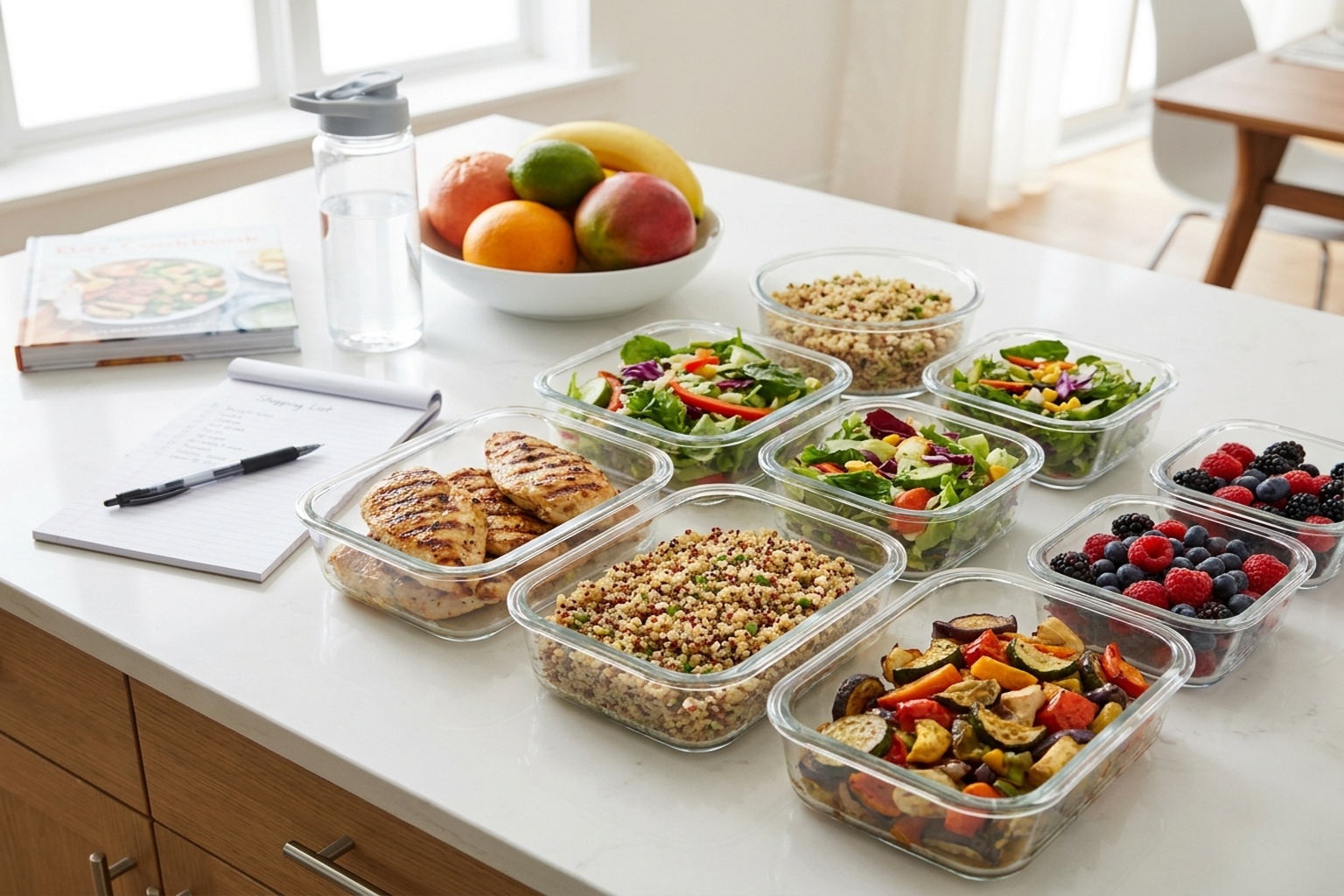
Let’s be honest — most “diet” advice online is written for people who already know what a macro is, already own a food scale, and already have three hours a week to meal prep. If you’re just starting out, none of that is helpful. It’s just noise.
So here’s the version nobody tells beginners: you don’t need a perfect plan. You need a simple one you can actually follow on a Tuesday when you’re tired, the kids need dinner, and the last thing you want to do is chop seventeen vegetables.
A weight loss meal plan for beginners isn’t about discipline or willpower — it’s about removing decisions. When you already know roughly what you’re eating, you stop negotiating with yourself at 6pm. That’s really the whole trick.
This guide covers what actually matters (nutrition basics, a realistic calorie deficit, a full 7-day plan) and skips what doesn’t (calorie-counting obsession, “clean eating” purity, or pretending broccoli is a personality). By the end, you’ll have something you can start using tonight.
What Is a Weight Loss Meal Plan, Really?
Strip away the marketing, and a meal plan is just this: deciding ahead of time what you’re going to eat, instead of figuring it out in the moment.
The reason it works isn’t magic — it’s psychology. Most people don’t overeat because they lack willpower; they overeat because they’re hungry, tired, and haven’t decided what’s for dinner, so the path of least resistance wins (usually takeout). A plan takes that decision off the table before you’re tired and hungry enough to make a bad one.
For beginners, a good plan should:
- Cut down on the “what do I even eat” panic
- Make grocery shopping faster and cheaper
- Build a rhythm you don’t have to think hard about
- Leave room for real life — birthdays, bad days, and the occasional pizza
If your plan doesn’t survive contact with a normal week, it’s not a good plan. It’s a diet you’ll quit in ten days.
How Weight Loss Actually Works
Underneath everything — every fad, every supplement, every “detox tea” — weight loss comes down to one mechanism: a calorie deficit. You eat somewhat less energy than your body burns, and over time, it taps into stored fat to cover the gap.
That’s genuinely it. But three things trip people up constantly:
Your number isn’t my number. Calorie needs depend on your age, height, activity level, muscle mass, and metabolism. Anyone selling you a universal “eat this many calories” rule is guessing. Online calculators get you a reasonable starting estimate — treat it as a starting point, not gospel.
Aggressive deficits backfire. Cutting calories hard feels productive for about a week, right up until you’re exhausted, irritable, and eating an entire bag of chips at 11pm because your body is fighting back. A moderate, boring deficit you barely notice is far more likely to still be in place six months from now.
The scale lies daily and tells the truth weekly. Water retention, hormones, sodium, even how much you slept — all of it moves the number on any given day. Look at the trend over two to three weeks, not the daily wobble.
The Nutrition Basics Nobody Explains Simply
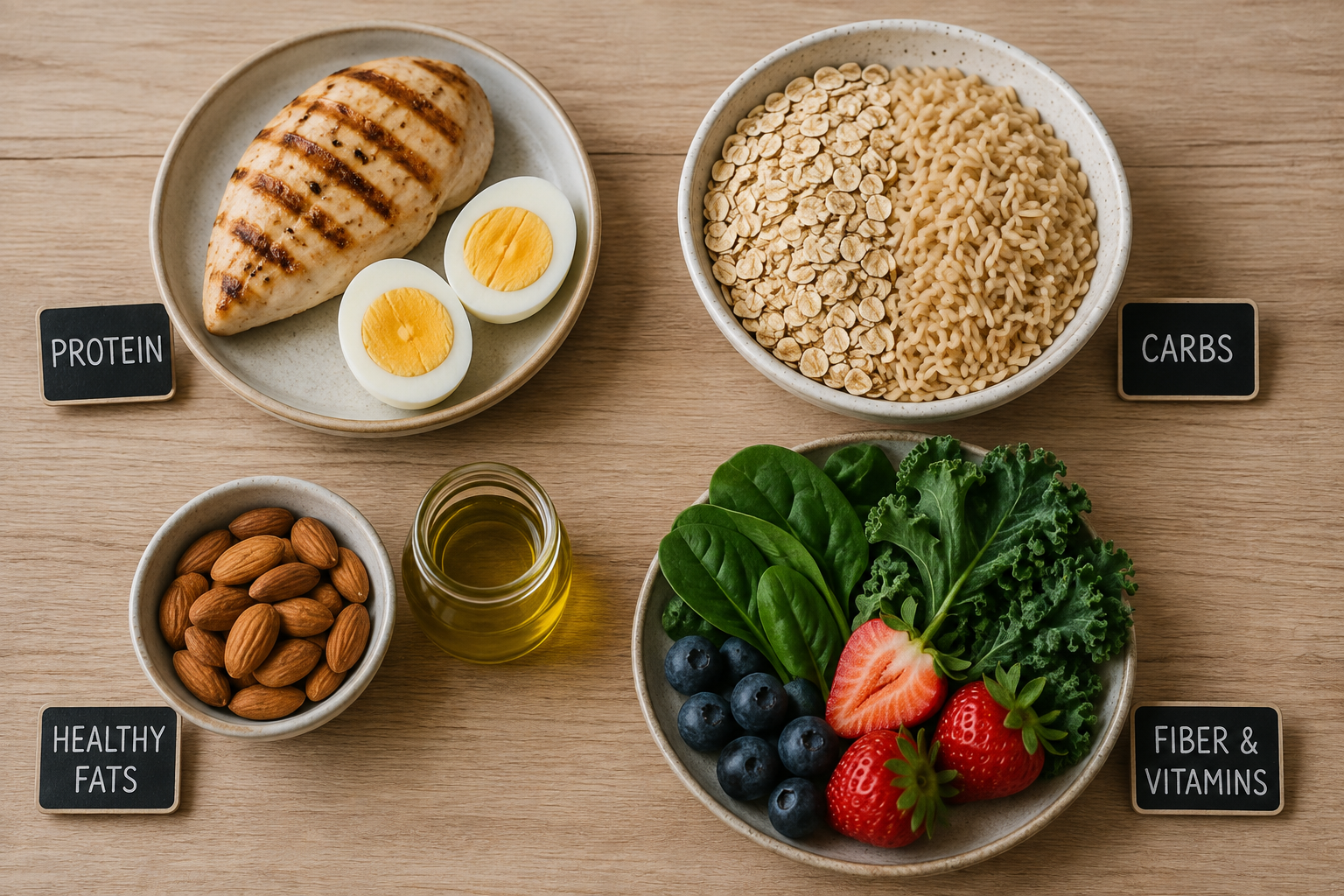
You don’t need a nutrition degree. You need to understand what each thing on your plate is actually for.
Protein is the one nutrient beginners consistently under-eat, and it’s arguably the most useful for weight loss — it keeps you full, protects your muscle while you’re in a deficit, and takes more energy to digest than fat or carbs. Chicken, fish, eggs, tofu, beans, Greek yogurt — all solid options.
Carbohydrates are not the villain the last decade of diet culture made them out to be. They’re your body’s preferred fuel. The difference between oats and a donut isn’t “carbs vs. no carbs” — it’s fiber, digestion speed, and how full you end up feeling. Whole, minimally processed carbs win, not because refined carbs are evil, but because they don’t fill you up as much per calorie.
Fat is essential — for hormones, for absorbing certain vitamins, for food actually tasting like something. Olive oil, avocado, nuts, seeds. The catch is that fat is calorie-dense, so a “healthy” tablespoon of peanut butter can quietly become four tablespoons if you’re not paying attention.
Fiber is the quiet MVP of weight loss. It slows digestion, keeps you full longer, and feeds the bacteria in your gut that, increasingly, seem to matter for everything from mood to metabolism. Vegetables, fruit, legumes, whole grains.
Vitamins and minerals won’t melt fat off your body, but running low on iron, magnesium, or vitamin D will absolutely tank your energy and motivation — which then tanks your ability to stick to anything. Eating a range of colors covers most of this without needing supplements.
Water does more heavy lifting than people give it credit for. Thirst is frequently mistaken for hunger, and being even mildly dehydrated makes everything — energy, focus, cravings — worse.
Building Your Own Plan: A Step-by-Step Approach
1. Get a rough calorie estimate. Use a calculator, or better, talk to a healthcare provider or registered dietitian if you have any underlying conditions. Aim for a moderate, sustainable deficit — not the most aggressive number the calculator will let you type in.
2. Build meals around whole foods first. Not “banning” processed food — just making whole foods the default, so processed stuff becomes the occasional guest rather than the main character.
3. Anchor every meal with protein. Decide the protein first, build the rest of the plate around it. It’s the single easiest habit that makes everything else fall into place.
4. Fill space with vegetables and fruit. They’re bulky, low-calorie, and genuinely help you feel like you ate a real meal instead of a sad portion of something.
5. Watch portions, not perfection. You don’t need a food scale forever. Your palm for protein, your fist for carbs, your thumb for fats — rough visual cues work fine once you get a feel for it.
6. Plan a day or two ahead, not a rigid month. Overplanning is where most people quit. Knowing tomorrow’s meals is usually enough.
7. Drink water like it’s part of the plan, not an afterthought. A glass before meals is a simple, almost embarrassingly effective habit.
A Practical 7-Day Beginner Meal Plan
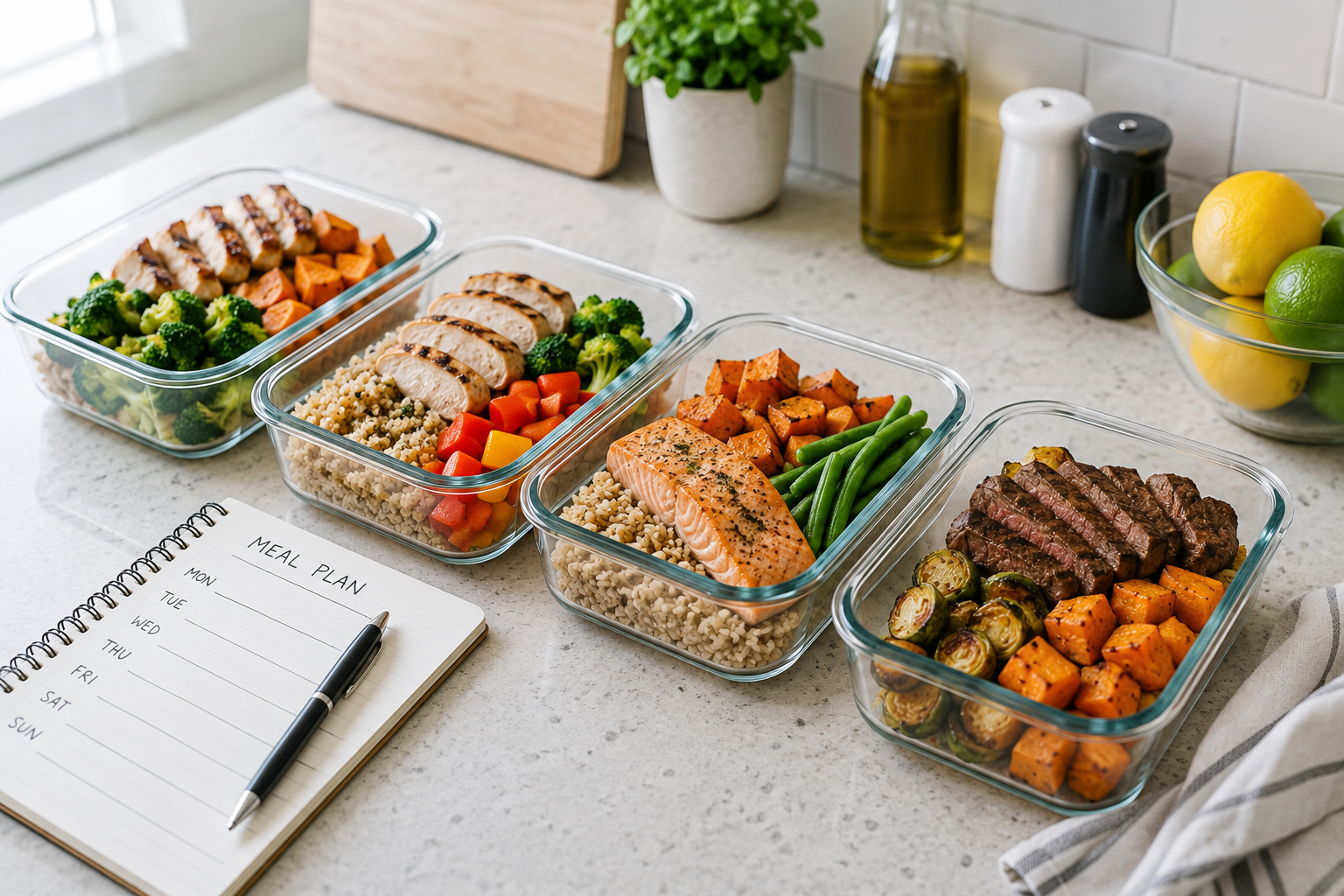
This is a starting template, not a prescription — your calorie and nutrient needs are personal, so adjust portions up or down based on your body, activity level, and hunger.
| Day | Breakfast | Lunch | Dinner | Optional Snack |
|---|---|---|---|---|
| Monday | Oatmeal with banana and a spoon of peanut butter | Grilled chicken salad with olive oil dressing | Baked salmon, steamed broccoli, brown rice | Greek yogurt with berries |
| Tuesday | Scrambled eggs, whole wheat toast, avocado | Turkey and vegetable wrap | Stir-fried tofu with vegetables and quinoa | A small handful of almonds |
| Wednesday | Greek yogurt with granola and berries | Lentil soup with whole grain bread | Grilled chicken, roasted sweet potato, green beans | Cucumber with hummus |
| Thursday | Whole wheat toast, cottage cheese, sliced tomato | Quinoa bowl with black beans, corn, salsa | Baked cod, steamed vegetables, brown rice | An apple with walnuts |
| Friday | Spinach-banana smoothie with protein powder | Grilled shrimp salad with avocado | Turkey chili with beans and vegetables | Carrot sticks with tzatziki |
| Saturday | Veggie omelet with whole grain toast | Chicken and brown rice bowl | Baked chicken thighs, roasted cauliflower, quinoa | Mixed berries |
| Sunday | Overnight oats with chia and peaches | Tuna salad with whole grain crackers | Grilled lean beef, sautéed spinach, sweet potato | Air-popped popcorn |
Easy Breakfast Ideas Worth Repeating
- Oatmeal with fruit and a spoon of nut butter
- Scrambled or boiled eggs with whole grain toast
- Greek yogurt with granola and berries
- Veggie omelet with toast
- Overnight oats with chia seeds
- Spinach-banana protein smoothie
- Cottage cheese with sliced fruit
- Toast with avocado and a boiled egg
Lunches That Don’t Feel Like a Punishment
- Grilled chicken salad with olive oil dressing
- Turkey or chicken wrap
- Lentil or vegetable soup with whole grain bread
- Quinoa bowl with beans and vegetables
- Tuna salad with whole grain crackers
- Grilled shrimp with a side salad
- Brown rice bowl with chicken and vegetables
- Chickpea salad with cucumber, tomato, feta
Dinners You Can Actually Cook on a Weeknight
- Baked salmon, broccoli, brown rice
- Grilled chicken breast, roasted vegetables
- Stir-fried tofu with vegetables and quinoa
- Turkey chili
- Baked cod, sweet potato, green beans
- Grilled lean beef, sautéed spinach
- Baked chicken thighs, roasted cauliflower
- Bean and vegetable stir-fry with rice
Snacks That Won’t Derail Anything
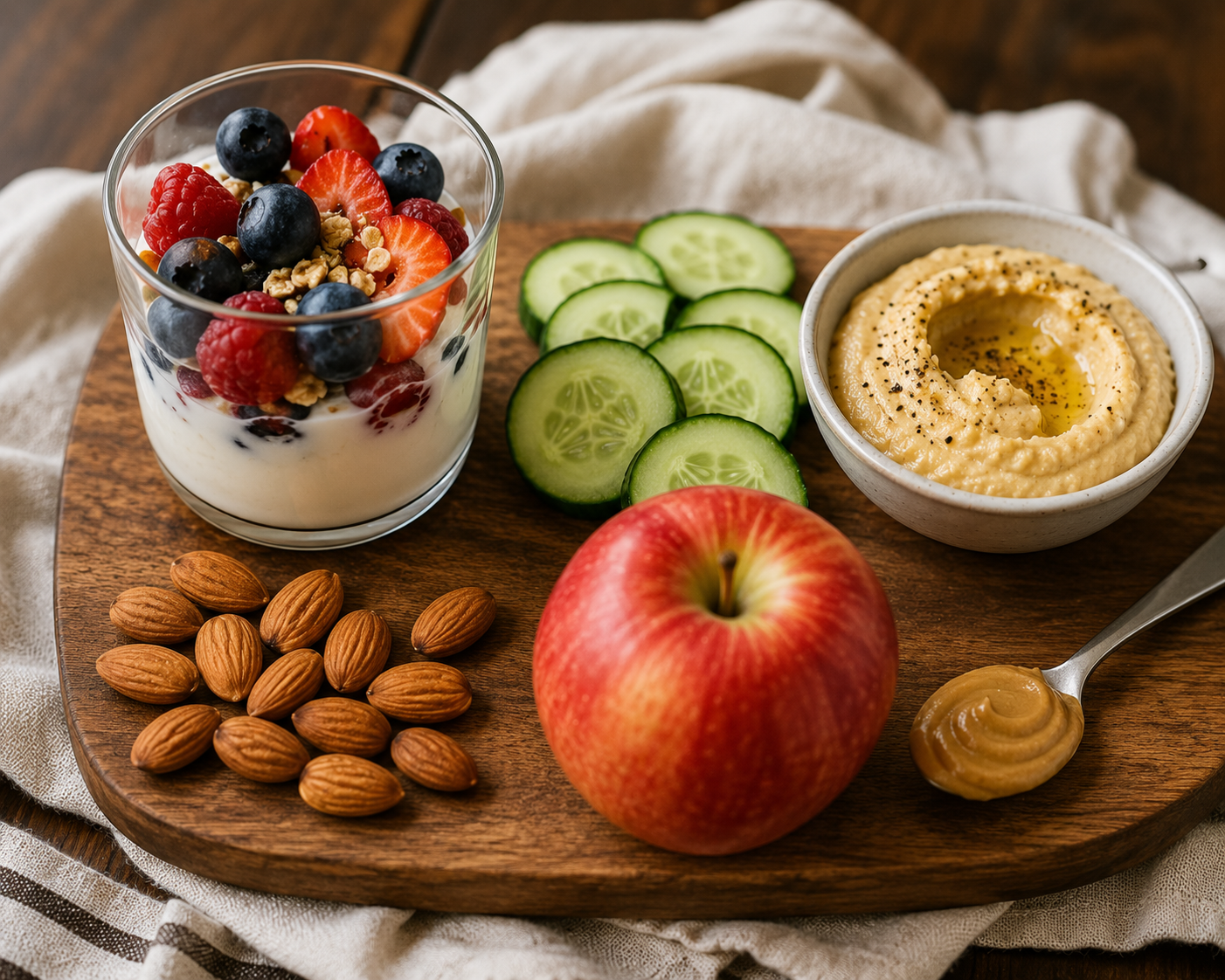
- Greek yogurt with berries
- A small handful of almonds or walnuts
- Cucumber or carrots with hummus
- An apple with peanut butter
- Air-popped popcorn
- Cottage cheese with fruit
- Hard-boiled eggs
- A small bowl of mixed berries
- Roasted chickpeas
- Rice cakes with avocado
Foods Worth Building Your Plate Around
- Lean proteins: chicken, turkey, fish, eggs, tofu, low-fat dairy
- Whole grains: oats, brown rice, quinoa, whole wheat bread and pasta
- Vegetables: leafy greens, broccoli, peppers, carrots, zucchini
- Fruits: berries, apples, oranges, bananas, pears
- Healthy fats: olive oil, avocado, nuts, seeds
- Legumes: lentils, chickpeas, black beans, kidney beans
- Dairy or alternatives: Greek yogurt, cottage cheese, fortified plant milk
Foods to Ease Up On (Not Ban Forever)
Nothing here needs to disappear from your life completely — that’s usually how people end up bingeing on it two weeks later. Just don’t build meals around:
- Sugary drinks — soda, sweetened coffee, juice
- Highly processed snacks and fast food
- Refined carbs like white bread and pastries
- Foods loaded with added sugar
- Heavy alcohol consumption
Moderation isn’t a cop-out — it’s the actual sustainable answer, even if it’s less exciting than “never eat sugar again.”
Mistakes Almost Every Beginner Makes (Including Me, Once)
- Eating too little, too fast. It feels productive for a week, then you crash and overeat.
- Skipping meals “to save calories.” Usually just delays hunger to a worse time of day.
- Skimping on protein. The fastest way to feel hungry all the time on a deficit.
- Drinking your calories. Lattes, juice, and soda add up without ever making you full.
- Eyeballing portions of calorie-dense foods. Olive oil and nut butter are healthy — and easy to over-pour.
- Expecting weekly drama on the scale. Real progress is slower and less exciting than influencers make it look.
- Jumping into extreme diets. The more restrictive the plan, the shorter its shelf life tends to be.
Making the Plan Easier to Actually Follow
- Batch cook once, eat off it twice. Cook extra protein and grains on a slower day.
- Shop with a list built from your plan. Reduces both impulse buys and decision fatigue.
- Keep decent snacks visible. If the fruit bowl is on the counter and the chips are in the back of the cupboard, you’ve already won half the battle.
- Use a smaller plate if portion control is a struggle. It’s a cheap trick, but it works.
- Let go of “perfect.” One off meal doesn’t undo a week of consistency — only quitting does.
- Track loosely for a while, not forever. Awareness matters more than precision, especially early on.
- Build in flexibility for real life. A rigid plan with zero room for a friend’s birthday dinner is a plan you’ll eventually resent.
The Bottom Line
There’s no secret meal plan that makes weight loss effortless — anyone promising that is selling something. What actually works is unglamorous: eat mostly whole foods, get enough protein, watch your portions, and stay consistent long enough for it to become boring instead of exciting.
That boredom, honestly, is the goal. When healthy eating stops feeling like an event and just becomes what you do, that’s when it starts working without you having to think about it every single day.
Frequently Asked Questions
What is the best meal plan for beginners trying to lose weight?
Whichever one you’ll actually follow. A simple, varied plan built around whole foods and consistent enough for your schedule beats a “perfect” plan you abandon in two weeks.
How many calories should a beginner eat to lose weight?
It depends on your age, weight, activity level, and goals. A calculator gives a reasonable starting estimate; a registered dietitian can fine-tune it, especially if you have health conditions.
Can I lose weight without giving up carbs?
Yes, easily. Choosing mostly whole, less processed carbs and watching portions matters far more than cutting carbs out entirely.
What should I eat for breakfast to lose weight?
Something with protein and fiber — eggs on whole grain toast, or Greek yogurt with fruit — tends to hold hunger off longer than cereal or pastries.
How much protein should I eat for weight loss?
Needs vary, but a simple rule that works for most beginners: include a protein source at every meal, and you’ll rarely go far wrong.
Can beginners follow a 7-day weight loss meal plan?
Definitely — it’s often the easiest way to build early structure. Just treat it as a flexible template, not a rulebook carved in stone.
