

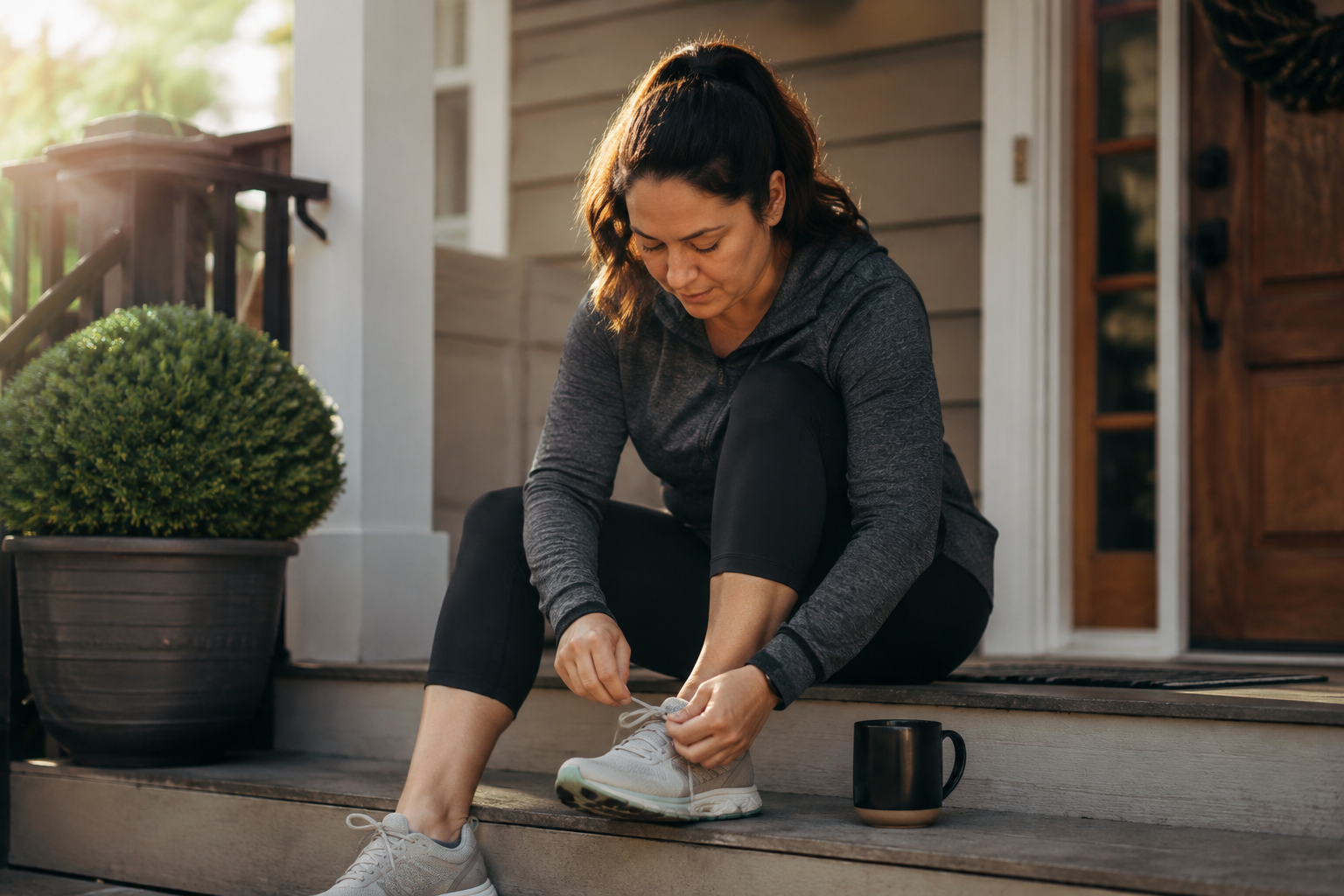
There’s a specific kind of guilt that comes with a plan you were excited about two weeks ago and haven’t touched since. The sneakers are still by the door. The half-used notebook with “Day 1” written at the top is somewhere in a drawer. And somewhere in the back of your mind is a quiet voice saying, here we go again.
I used to think the people who “had it together” with fitness had some kind of discipline gene I was missing. Then I actually asked a few of them how they did it, and the answer was almost anticlimactic: they weren’t more disciplined. They’d just stopped trying to be perfect.
If you’ve started strong, kept it up for a couple of weeks, and then quietly let it all fade — you’re not broken, and you’re definitely not alone. That cycle is so common it barely counts as a personal failing anymore. It’s closer to a design flaw in how most of us are taught to approach fitness: go big, go hard, burn out, feel guilty, repeat next January.
Here’s the part nobody puts on a motivational poster: the fitness habits that improve health are almost embarrassingly small. A walk after dinner. Going to bed twenty minutes earlier. Drinking a glass of water before your afternoon coffee instead of after. None of it looks impressive on Instagram, and none of it will ever trend. But six months of small, unglamorous, repeated actions will quietly outperform six weeks of intensity every single time — because one of them is designed to last, and the other one is designed to impress.
Fitness Habits That Improve Health
Make Daily Movement a Priority
Exercise and movement aren’t the same thing, and that distinction matters more than people realize. You can do a great 45-minute workout and still spend the other 15 hours of your day almost completely still — and that stillness has its own cost.
Small ways to break it up:
- Take the stairs when it’s two flights or less
- Walk while you’re on phone calls instead of sitting through them
- Park at the far end of the lot on purpose
- Stand up and move for two minutes every hour you’re at a desk
None of this requires a gym bag. It just requires noticing how much of your day happens sitting down.
Follow a Consistent Exercise Routine
A workout you do religiously will always beat a “perfect” program you do twice and abandon. Your body responds to repetition, not heroics.
“Motivation gets you started. Habit is what keeps you going when motivation clocks out.”
The better question isn’t “how intense can today’s workout be” — it’s “will I still be doing some version of this in six months?” If the honest answer is no, the plan is too ambitious for the life you’re actually living.
Include Both Strength Training and Cardio
These aren’t competing categories — they’re two different tools doing two different jobs.
| Strength Training | Cardio | |
|---|---|---|
| Main benefit | Builds and preserves muscle, supports bone density | Strengthens heart and lungs, builds endurance |
| Best for | Long-term metabolism, functional strength, aging well | Stamina, heart health, stress relief |
| How often | 2–3 sessions per week | 2–3 sessions per week (or daily walking) |
| Beginner example | Bodyweight squats, push-ups, resistance bands | Brisk walking, cycling, swimming |
| Common mistake | Skipping it, assuming cardio is “enough” | Overdoing intensity too early |
You don’t need to master both at once — alternating a couple of sessions of each per week gives your body a well-rounded signal to adapt.
Prioritize Proper Sleep
This is the habit people cut first and benefit from most. While you sleep, your body repairs muscle tissue, regulates hormones like cortisol, and restores the energy reserves you’ll draw on tomorrow.
Shortchange your sleep consistently, and you’re not just tired — recovery slows, cravings for quick sugar spike, and every other habit on this list gets harder to keep. Aiming for 7–9 hours isn’t a luxury; it’s closer to the foundation everything else sits on.
Stay Hydrated

Even mild dehydration can quietly drag down your energy, focus, and workout performance before you notice you’re thirsty. Simple fixes work better than complicated hydration plans:
- Keep a water bottle somewhere you’ll actually see it
- Drink a glass first thing in the morning, before coffee takes over
- Treat a dry mouth or headache as an early signal, not a random annoyance
Eat Nutritious Foods
Your fitness habits and how you eat aren’t separate conversations — they’re the same one. And you don’t need a restrictive diet to eat well.
| Sustainable Approach | Extreme Approach | |
|---|---|---|
| Structure | Balanced meals, protein + veggies + whole grains | Eliminating entire food groups |
| Flexibility | Room for treats and social eating | Rigid rules, little flexibility |
| Typical outcome | Slow, steady progress that sticks | Fast results that often reverse |
| Mental effect | Neutral relationship with food | Guilt, restriction, burnout |
| Long-term success rate | Higher — easier to maintain for years | Lower — hard to sustain past weeks |
A plate that’s roughly balanced — some protein, some color from fruit or vegetables, whole grains over refined ones, and healthy fats without fear — beats any “perfect” diet you’ll quit in three weeks.
Focus on Proper Form and Injury Prevention
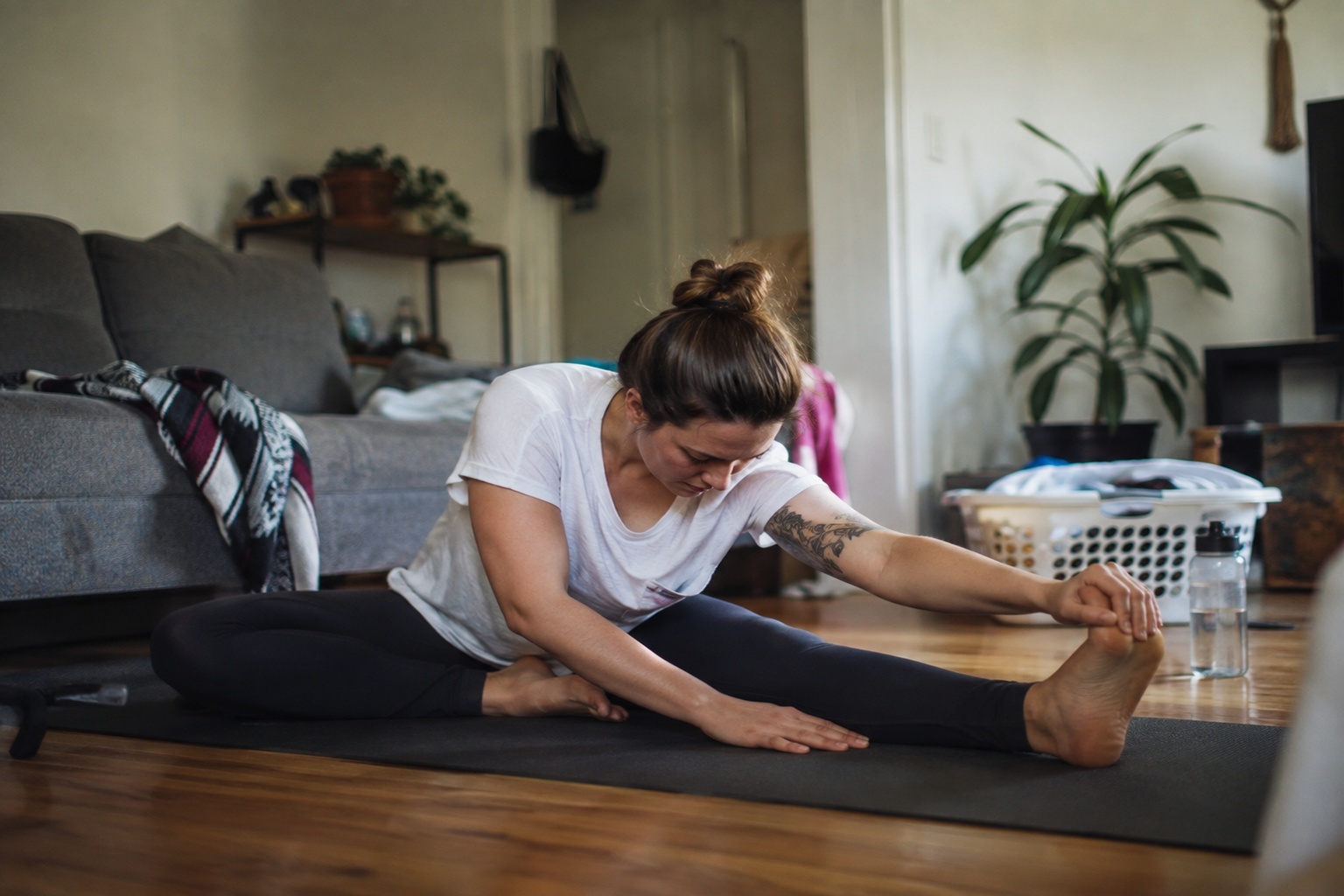
An injury is one of the fastest ways to end a fitness habit before it becomes one. A short warm-up, some light stretching afterward, and attention to form during strength work isn’t fussy — it’s what keeps you training instead of sidelined.
If something feels sharp or genuinely painful mid-workout, that’s your body sending a message worth listening to, not pushing through.
Avoid Sitting for Too Long
Sedentary time is now understood as its own health risk — separate from whether you exercise at all. You can hit the gym four times a week and still be affected by nine hours of sitting the other days.
Standing during calls, short walking breaks each hour, or a standing desk if your setup allows it — small interruptions to sitting add up more than people expect.
Set Realistic Fitness Goals
“Get in shape” isn’t a goal — it’s a wish. It’s too vague to act on and too easy to abandon. SMART goals (Specific, Measurable, Achievable, Relevant, Time-bound) give you something concrete to actually follow.
Instead of “exercise more,” try: “walk 20 minutes, four days a week, for the next month.” It’s specific enough to track and realistic enough to survive a busy week.
Practice Active Recovery
A rest day doesn’t mean total stillness — it means something gentler. Light walking, stretching, or mobility work on off days keeps blood flowing and stiffness down without adding real strain.
Skip rest entirely for too long, and fatigue or injury tends to set your progress back further than a planned day off ever would.
Manage Stress
Exercise is one of the most reliable tools we have for managing everyday stress — it helps regulate cortisol, releases endorphins, and gives your mind a break from whatever’s been looping all day.
“You’re not just training your body when you exercise. You’re teaching your nervous system that it’s allowed to calm down.”
The relationship runs both directions: movement lowers stress, and lower stress makes it easier to actually show up for your next workout.
Track Your Progress
You don’t need a spreadsheet with twelve tabs. A simple note on your phone, a habit-tracking app, or checkmarks on a calendar can reveal patterns you’d otherwise miss — like realizing you skip workouts every Wednesday, or that your energy noticeably improves after a full week of decent sleep.
Tracking also hands you something more motivating than the scale: visible, undeniable proof of consistency.
Build a Routine You Actually Enjoy
The “best” workout is the one you’ll actually repeat. If running feels like punishment, stop forcing it — try cycling, swimming, dancing, hiking, or a sport with friends instead.
Enjoyment isn’t a bonus feature here. It’s usually the single biggest factor in whether a habit survives past its first difficult week.
Stay Consistent Instead of Chasing Perfection
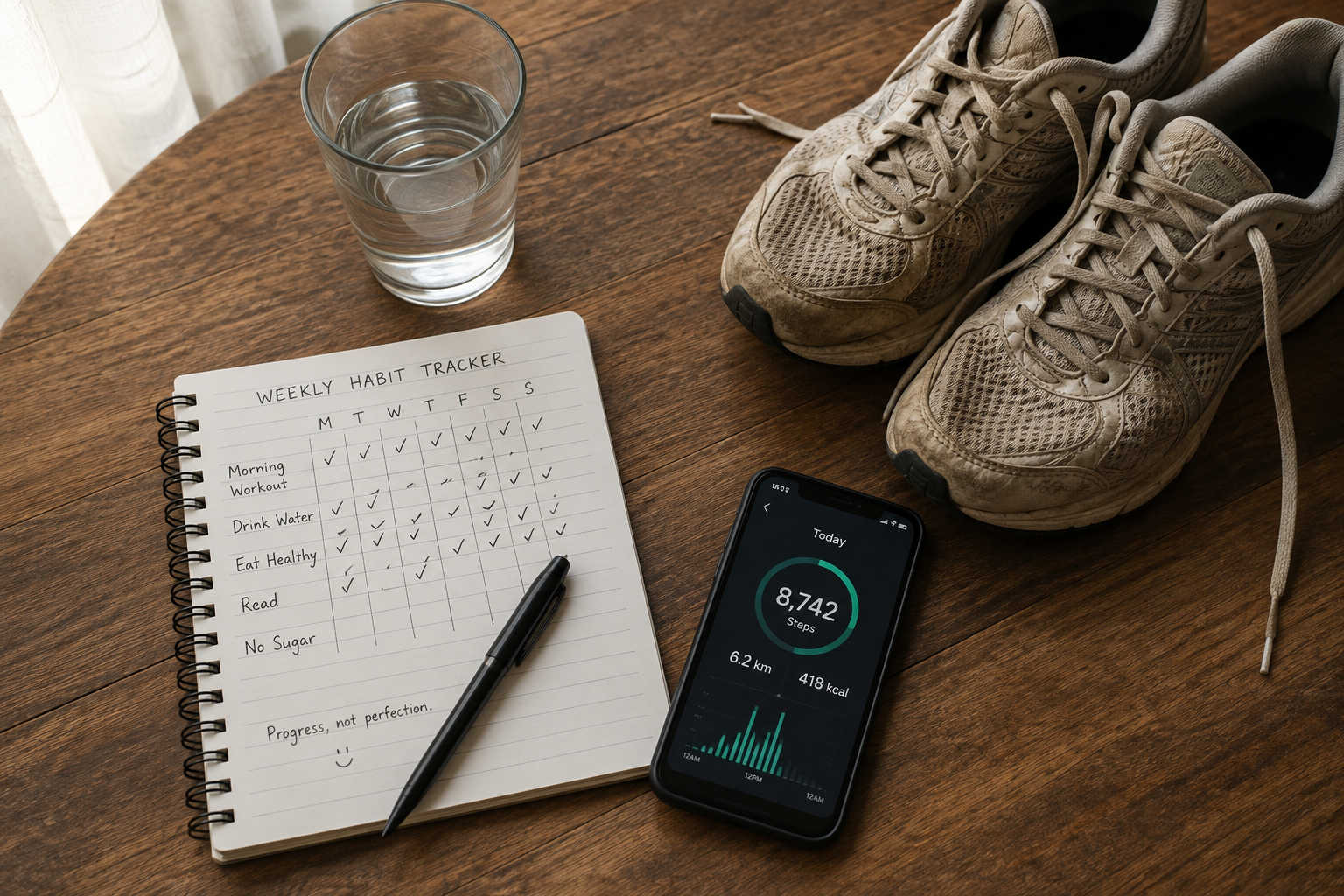
Missing a workout or eating something off-plan doesn’t erase your progress. What actually derails people is treating a normal slip as proof the whole thing failed, and quitting because of it.
Imperfect effort, repeated for months, will always beat a flawless plan you abandon after two weeks.
How to Build Healthy Fitness Habits
If you’re starting from zero, keep it simple:
- Pick one habit, not five. Trying to overhaul everything at once is the most common reason people quit in week two.
- Attach it to something you already do. Stretch right after brushing your teeth, walk right after lunch — pairing new habits with existing ones makes them easier to remember.
- Start smaller than feels necessary. A 10-minute walk gets repeated. An hour-long gym session you’re dreading gets skipped.
- Track it for two weeks. Seeing consistency written down builds its own kind of motivation.
- Add the next habit once the first feels automatic. Layer changes in gradually instead of trying to fix your whole life on a Monday.
This kind of beginner workout routine is far less intimidating than jumping straight into a five-day training split — and far more likely to still be part of your life a year from now.
Simple Daily Fitness Routine Example
Here’s a realistic shape for a normal day, not a rigid template:
- Morning: Glass of water, 10-minute walk or stretch before the day gets loud
- Midday: Short walk after lunch, a meal with protein and some vegetables
- Afternoon: A standing break every hour, a snack that isn’t just sugar
- Evening: 30–45 minutes of movement (alternating strength and cardio through the week)
- Night: Screens off a bit earlier, aiming for 7–9 hours of sleep
Adjust the timing to fit your actual life. The point isn’t the schedule — it’s having a rhythm you can repeat without white-knuckling through it.
Common Mistakes to Avoid
- Doing too much too quickly — ramping up before your body’s had time to adapt
- Skipping rest days — treating recovery as optional instead of part of the process
- Following extreme diets — restrictive plans that are nearly impossible to live with long-term
- Comparing yourself to others — everyone’s starting point and timeline is different
- Expecting immediate results — real change in strength, energy, and health takes weeks to months, not days
- Ignoring proper exercise form — trading long-term safety for short-term speed
Conclusion
There’s no single dramatic shift that transforms your health overnight, and honestly, that’s the reassuring part. The fitness habits that improve health are ordinary and repeatable — moving a little more, sleeping a little better, eating a bit more balanced, showing up even on the days it’s not exciting.
“You don’t need a new life to get healthier. You need one habit, repeated long enough to become part of the old one.”
You don’t have to fix everything this week. Pick one small habit — a daily walk, an earlier bedtime, a glass of water before your coffee — and give it a real chance before adding the next. That’s how a sustainable fitness routine actually gets built: one habit at a time, repeated until it’s just who you are.
Frequently Asked Questions
What are the best fitness habits for beginners?
Start with daily movement like walking, consistent sleep, and one or two simple strength or cardio sessions a week. Build from there instead of starting with an intense program you’ll likely abandon.
How long does it take to build a fitness habit?
Anywhere from a few weeks to a couple of months, depending on the person and the habit itself. Consistency matters far more than speed here.
Can walking every day improve health?
Yes. Regular walking supports cardiovascular health, helps with weight regulation, improves mood, and is one of the most sustainable forms of activity for almost anyone, at almost any fitness level.
How often should I exercise for good health?
General guidelines suggest around 150 minutes of moderate activity per week, plus two strength sessions. Adjust based on your goals and where you’re starting from.
What is the easiest healthy fitness habit to start with?
Daily walking. No equipment, minimal time commitment, and it can happen almost anywhere.
Is it normal to feel unmotivated even with a good routine?
Completely normal. Motivation naturally rises and falls — which is exactly why habits (things you do regardless of mood) matter more than waiting to “feel like it.”
Conclusion
There’s no single dramatic shift that transforms your health overnight, and honestly, that’s the reassuring part. The fitness habits that improve health are ordinary and repeatable — moving a little more, sleeping a little better, eating a bit more balanced, showing up even on the days it’s not exciting.
“You don’t need a new life to get healthier. You need one habit, repeated long enough to become part of the old one.”
You don’t have to fix everything this week. Pick one small habit — a daily walk, an earlier bedtime, a glass of water before your coffee — and give it a real chance before adding the next. That’s how a sustainable fitness routine actually gets built: one habit at a time, repeated until it’s just who you are.
This article is for general informational purposes only. If you have existing health concerns or are new to exercise, consult a qualified healthcare professional before starting a new fitness program.
Suggested Internal Linking Opportunities
- Link “beginner workout routine” in the “How to Build Healthy Fitness Habits” section to a dedicated beginner workout guide.
- Link “healthy lifestyle tips” in the introduction or conclusion to a broader lifestyle/wellness hub page.
- Link “weight loss exercises” in the “Include Both Strength Training and Cardio” section to a weight-loss-focused workout article.
- Link “nutrition tips for fitness” in the “Eat Nutritious Foods” section to a nutrition-specific guide.
- Link “how to build a daily workout routine” in the “Simple Daily Fitness Routine Example” section to a more detailed routine-building article.
