

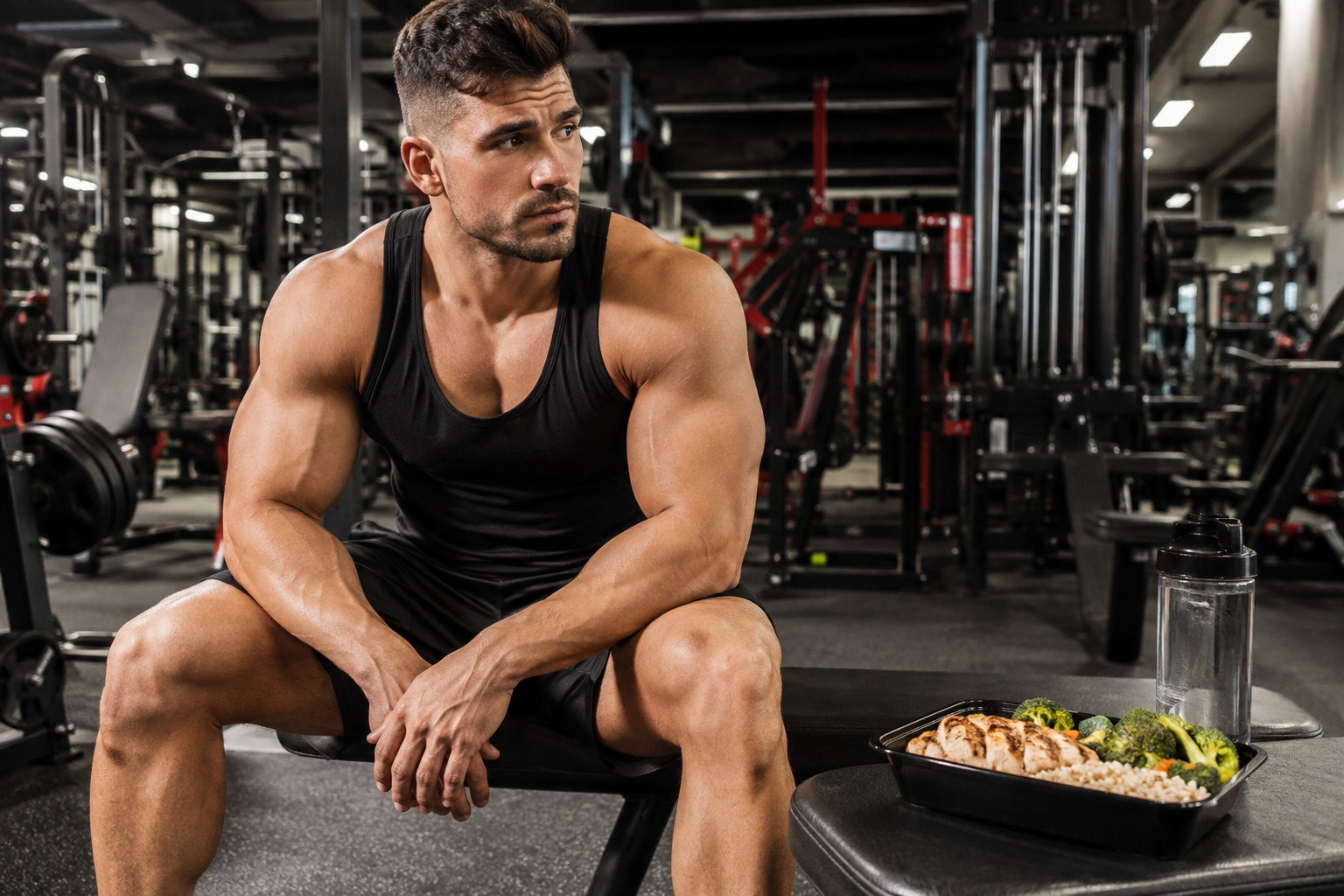
Lifting weights builds the stimulus for muscle growth, but what happens in the kitchen decides whether that stimulus turns into results. You can follow a well-designed training program to the letter and still stall out if your plate isn’t pulling its weight. That’s why nutrition tips for bodybuilding matter just as much as your workout split, your set and rep scheme, or how much weight you’re moving.
Muscle tissue doesn’t repair and grow in the gym — it grows during recovery, fueled by the calories, protein, carbohydrates, and micronutrients you take in over the following hours and days. Skimp on any of those, and your training effort has less to work with. Get them right, and you give your body every chance to respond to the work you’re putting in.
This guide walks through the fundamentals of bodybuilding nutrition: why it matters, the habits that make the biggest difference, the foods worth building meals around, and how to handle training-day eating so your workouts and recovery actually pay off.
“You can’t out-train a bad diet. The gym gives your muscles a reason to grow — food gives them the material to do it with.” — common saying among strength coaches
Why Nutrition Matters for Bodybuilding
Training breaks muscle fibers down. Nutrition is what rebuilds them stronger. A handful of nutritional levers determine how well that process goes:
Calories set the stage. Eating enough to support growth (or, during a cut, not so little that you sacrifice muscle) determines whether your body has the raw materials and energy to repair tissue and adapt to training.
Protein supplies the amino acids used to repair and build new muscle fibers. Without adequate protein intake for bodybuilding, even a great training program has limited upside.
Carbohydrates replenish the glycogen your muscles burn through during training and give you the energy to push hard in your next session. Athletes who under-fuel with carbs often notice flat, low-energy workouts.
Fats support hormone production, including testosterone, which plays a role in muscle-building capacity. Cutting fat too aggressively can work against your goals.
Hydration affects nearly every physiological process involved in performance and recovery, from nutrient transport to joint lubrication to temperature regulation during hard sets.
Micronutrients — vitamins and minerals like magnesium, zinc, vitamin D, and iron — support energy metabolism, immune function, and muscle contraction. They’re easy to overlook but hard to fully replace with supplements alone.
None of these factors works in isolation. A muscle-building diet is really about how well these pieces fit together over weeks and months, not any single meal or macro number.
Macronutrient Roles at a Glance
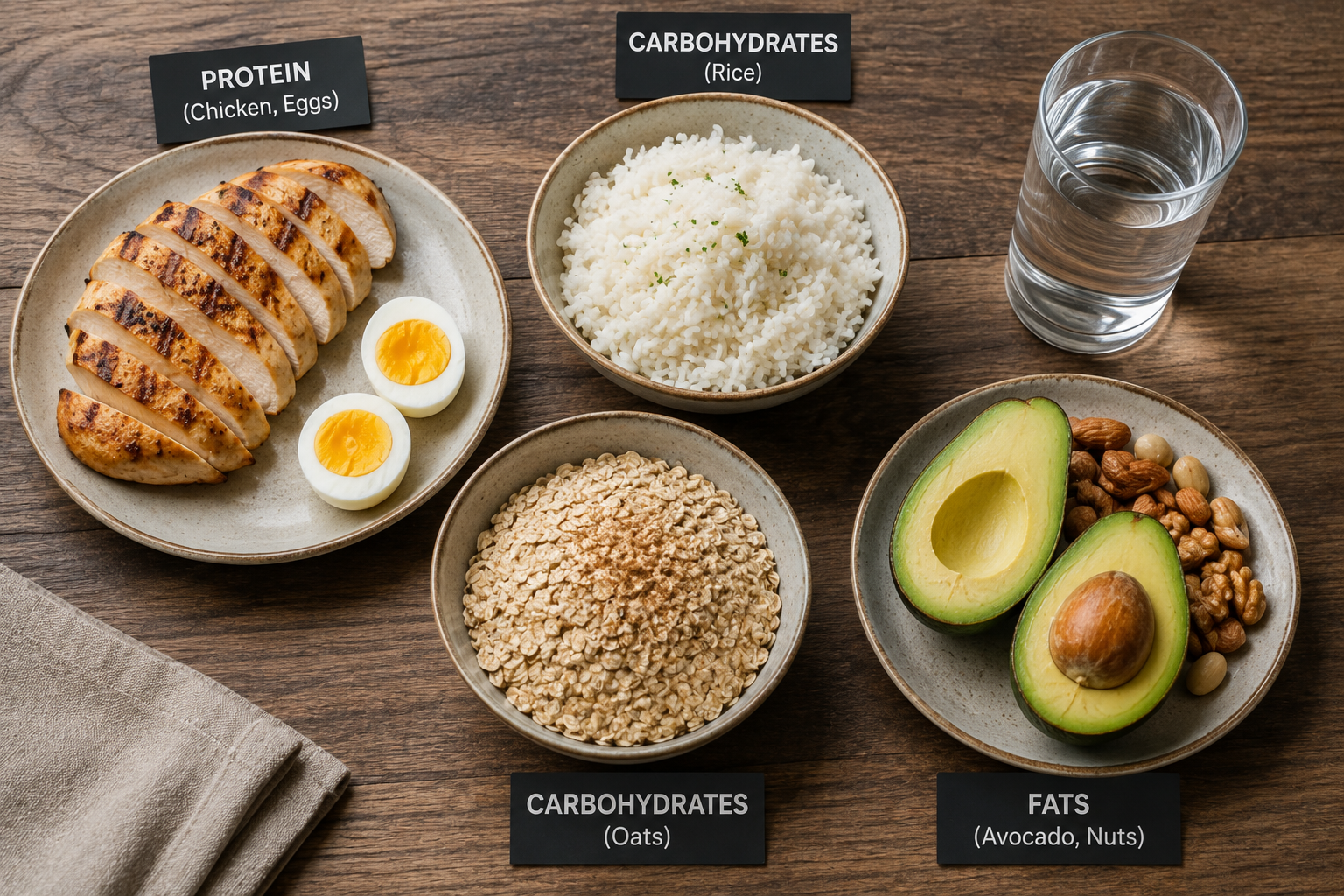
| Macronutrient | Primary Role in Bodybuilding | General Food Sources | Typical Focus |
|---|---|---|---|
| Protein | Repairs and builds muscle fibers | Chicken, fish, eggs, Greek yogurt, tofu | ~0.7–1 g per lb of body weight/day |
| Carbohydrates | Fuels training, replenishes glycogen | Rice, oats, potatoes, fruit, whole grains | Adjusted to training volume |
| Fats | Supports hormone production, adds calories | Olive oil, nuts, avocado, fatty fish | Moderate, consistent intake |
| Water | Supports performance and recovery | Water, hydrating foods, electrolyte drinks | Tracked, especially in heavy training blocks |
10 Essential Nutrition Tips for Bodybuilding
1. Eat Enough Protein
Protein needs vary by body weight, training experience, and goals, but many lifters do well somewhere in the range of 0.7–1 gram of protein per pound of body weight daily. Spreading that intake across three to five meals tends to be easier to hit and may support muscle repair better than cramming it into one or two large meals.
2. Consume Enough Calories
You can’t build meaningful muscle in a significant calorie deficit. If your goal is muscle growth, you generally need to eat at or slightly above maintenance. The right number depends on your body size, activity level, and how quickly you want to gain, so treat any generic calorie target as a starting point to adjust, not a fixed rule.
3. Choose Quality Carbohydrates
Carbohydrates for muscle growth aren’t optional extras — they’re fuel. Prioritize sources like oats, rice, potatoes, whole grains, and fruit over heavily processed options. These digest at a pace that supports steady energy rather than sharp spikes and crashes.
4. Include Healthy Fats
Healthy fats for bodybuilding — think olive oil, nuts, seeds, avocado, and fatty fish — support hormone health and give you a calorie-dense way to help meet your energy needs, especially if you struggle to eat enough on a high-volume training schedule.
5. Prioritize Whole Foods
Supplements and processed convenience foods have a place, but whole foods deliver a broader spread of vitamins, minerals, and fiber that support overall health alongside muscle growth. Build your diet around real food first.
6. Eat Balanced Meals Throughout the Day
Rather than obsessing over perfect meal timing, aim for consistent meals that each include a protein source, a carbohydrate source, and some fat or vegetables. This keeps energy steadier and makes it easier to hit your daily totals.
7. Fuel Your Workouts Properly
Training on empty, especially for longer or more intense sessions, can hurt performance. A meal or snack with carbohydrates and a moderate amount of protein in the hours before training helps you show up with the energy to train hard.
8. Focus on Post-Workout Nutrition
The period after training is when your muscles are primed to use nutrients for repair. Getting protein and carbohydrates in within a reasonable window after your session — generally within a couple of hours — supports recovery, though the exact timing matters less than hitting your overall daily targets.
9. Stay Properly Hydrated
Hydration for muscle growth is easy to underestimate. Even mild dehydration can reduce strength and endurance. Needs vary with body size, climate, and sweat rate, but many lifters benefit from tracking water intake rather than relying on thirst alone during heavy training blocks.
10. Track Your Progress and Adjust Your Diet
Bodies respond differently to the same numbers on paper. Track your weight, strength, and how you feel over a few weeks, then adjust calories or macros based on the trend — not a single day’s reading on the scale.
Best Foods for Bodybuilding Nutrition
A strong bodybuilding meal plan is built from a rotating cast of reliable, nutrient-dense foods:
Lean protein sources:
- Chicken breast and thigh
- Turkey
- Lean beef
- Eggs and egg whites
- White fish and salmon
- Greek yogurt and cottage cheese
- Tofu and tempeh
Complex carbohydrates:
- Oats
- Brown and white rice
- Sweet potatoes and potatoes
- Quinoa
- Whole-grain bread and pasta
Healthy fats:
- Olive oil
- Avocado
- Almonds, walnuts, and other nuts
- Nut butters
- Fatty fish like salmon
Fruits and vegetables:
- Berries
- Bananas
- Leafy greens
- Broccoli and other cruciferous vegetables
- Bell peppers
Convenient healthy snacks:
- Greek yogurt with fruit
- A protein shake
- A handful of nuts and dried fruit
- Rice cakes with nut butter
- Hard-boiled eggs
Rotating through these options helps you avoid the boredom that often derails a diet while still hitting your protein, carbohydrate, and fat targets.
Pre-Workout Nutrition
What you eat before training affects how much you can lift and how long you can sustain effort. As a general approach, aim to eat a meal with carbohydrates and a moderate amount of protein one to three hours before training. If you’re training soon after waking or don’t have much time, a smaller, faster-digesting snack 30–60 minutes out can work better than a large meal.
Simple pre-workout meal examples:
- Oatmeal with a scoop of protein powder and banana
- Grilled chicken with white rice
- Greek yogurt with berries and honey
- A turkey sandwich on whole-grain bread
Everyone digests differently, so pay attention to how your stomach handles different foods before a hard session and adjust portion size and timing accordingly.
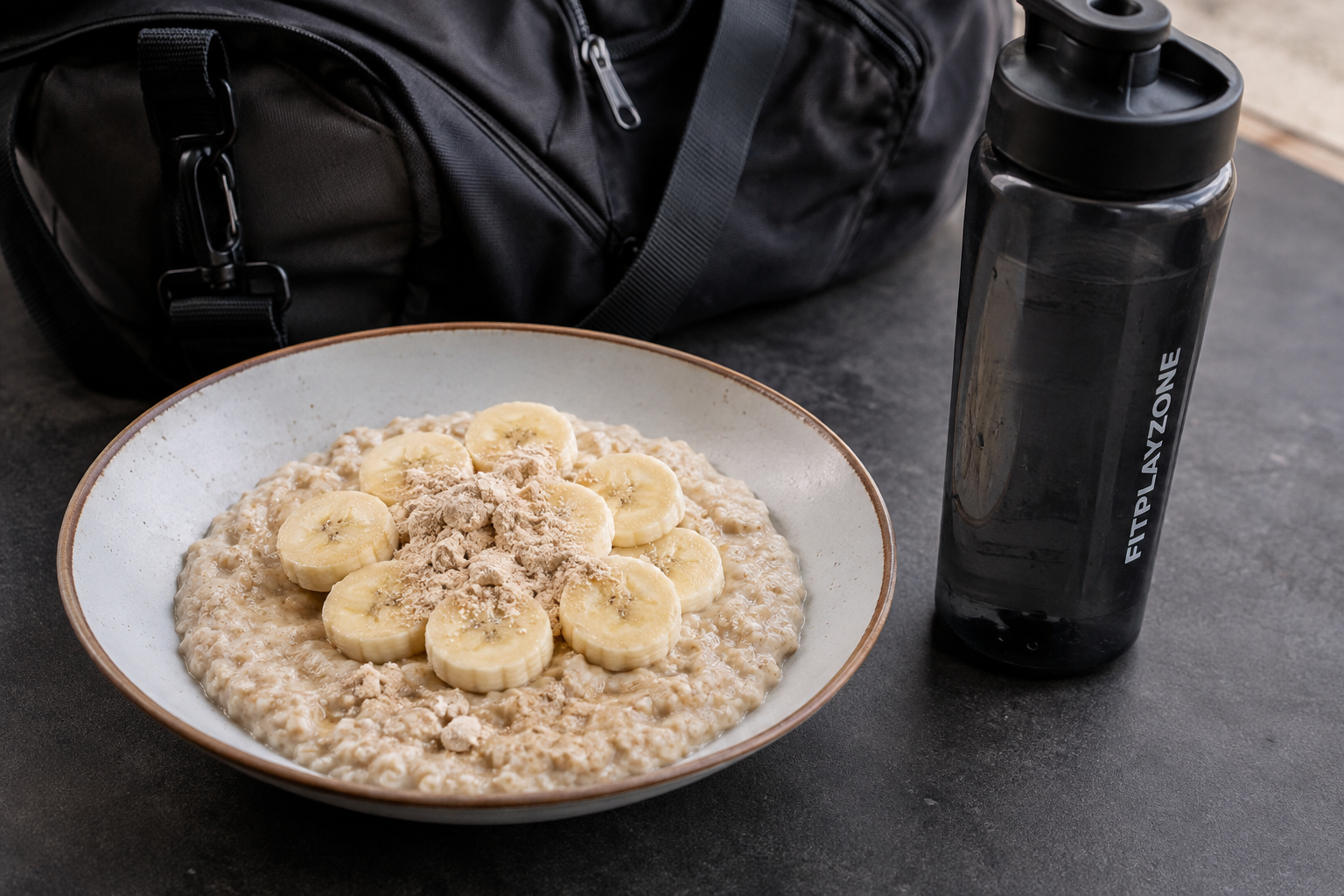
“Eating before you train isn’t about ritual, it’s about not showing up to do hard work on an empty tank.” — often repeated in gym culture
Post-Workout Nutrition
After training, your body is looking to replace glycogen and repair muscle tissue. A combination of protein and carbohydrates supports both. You don’t need to sprint to the kitchen the second you rack your last set, but eating within a couple of hours of finishing generally lines up well with recovery.
Practical post-workout meal examples:
- Grilled salmon with sweet potato and steamed vegetables
- A protein shake with a banana and a rice cake
- Eggs with whole-grain toast and avocado
- Ground beef or turkey with rice and a side salad
If your next meal is a while away, a protein shake can bridge the gap without complicating things.
Pre-Workout vs. Post-Workout Nutrition
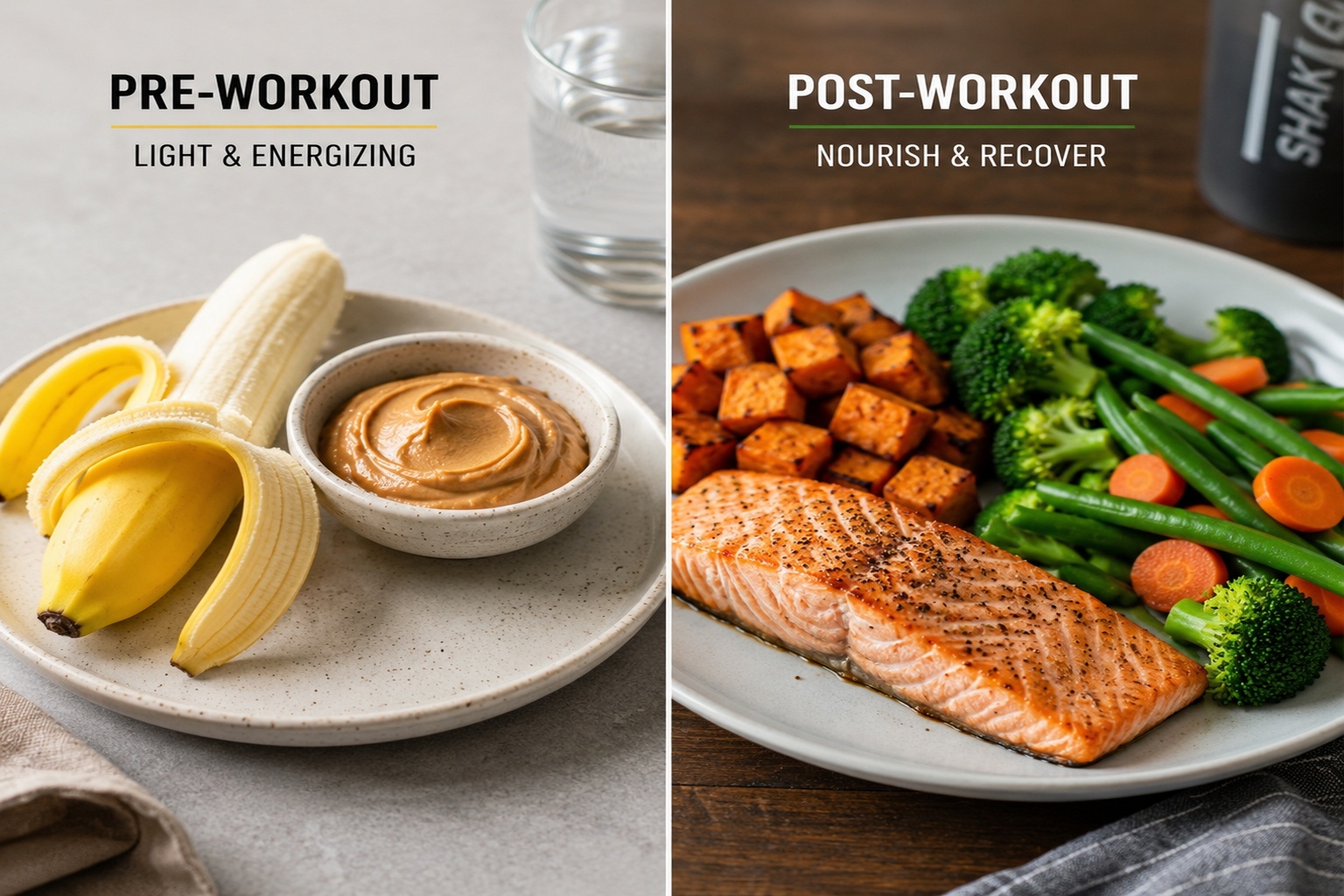
| Factor | Pre-Workout | Post-Workout |
|---|---|---|
| Main Goal | Fuel performance during training | Support muscle repair and glycogen refill |
| Timing | 1–3 hours before (or a light snack 30–60 min before) | Within about 2 hours after training |
| Macronutrient Focus | Carbohydrates + moderate protein | Protein + carbohydrates |
| Meal Size | Light to moderate, easy to digest | Can be a fuller, balanced meal |
| Example | Oatmeal with protein powder and banana | Grilled salmon, sweet potato, vegetables |
Simple Bodybuilding Meal Plan
Here’s an example of what a day of eating might look like for someone training with muscle growth in mind. Portions should be adjusted to your own calorie and protein needs.
Breakfast: Scrambled eggs, oatmeal with berries, and a glass of milk
Mid-Morning Snack: Greek yogurt with almonds and honey
Lunch: Grilled chicken breast, brown rice, and roasted broccoli
Pre-Workout Snack: Banana with peanut butter
Post-Workout Meal: Lean beef or turkey, sweet potato, and mixed vegetables
Dinner: Baked salmon, quinoa, and a side salad with olive oil dressing
Evening Snack: Cottage cheese with pineapple, or a casein-based protein shake
This structure spreads protein and carbohydrates throughout the day, supports training performance, and leaves room for flexibility depending on your schedule.
Common Bodybuilding Nutrition Mistakes
Undereating. Chronic under-fueling — often from underestimating calorie needs — is one of the most common reasons lifters struggle to gain muscle despite consistent training.
Ignoring carbohydrates. Cutting carbs too aggressively can leave you flat in the gym and slower to recover, undermining the very training that’s supposed to drive growth.
Relying too heavily on supplements. Protein powder and other supplements are convenient, but they’re meant to fill gaps in a diet, not replace whole foods as the foundation.
Poor hydration. Skipping water during training, especially in hot conditions or long sessions, can quietly sabotage performance and recovery.
Inconsistent eating. A great diet on paper doesn’t help much if it’s only followed a few days a week. Consistency over time matters more than any single “perfect” day.
Supplements for Bodybuilding: Are They Necessary?
Supplements can be a useful complement to a solid diet, but they aren’t a substitute for one. No supplement will make up for consistently inadequate calories or protein.
Protein powder is a convenient way to hit daily protein targets, particularly around workouts or when whole-food options aren’t practical.
Creatine monohydrate is one of the more researched supplements in sports nutrition and is commonly used to support strength and training performance.
Other supplements — like multivitamins, fish oil, or a pre-workout formula — may have a place depending on individual needs and diet gaps, but none of them replace the basics: enough calories, enough protein, and a foundation of whole foods.
Final Thoughts
Good bodybuilding nutrition isn’t about chasing a perfect formula — it’s about consistently covering the basics: enough calories to support growth, enough protein to repair and build muscle, sufficient carbohydrates to fuel training, healthy fats to support hormone health, and enough water to keep everything running well. Layer in whole foods, pay attention to how your pre- and post-workout meals affect your training, and adjust your approach based on how your body responds over time.
None of this requires perfection. What it requires is showing up with a reasonably solid plan, day after day, and letting consistency do the heavy lifting alongside your training.
Frequently Asked Questions
How much protein should I eat for bodybuilding?
Many lifters do well around 0.7–1 gram of protein per pound of body weight per day, though needs can vary based on training volume, goals, and individual factors.
Should I eat before or after a workout?
Ideally both. A meal or snack with carbs and protein before training supports performance, while eating again afterward supports recovery. Total daily intake matters more than either meal alone.
What foods are best for muscle growth?
Lean proteins like chicken, fish, and eggs; complex carbohydrates like rice, oats, and potatoes; and healthy fats like olive oil and nuts form a solid foundation.
How many calories do bodybuilders need?
This depends heavily on body size, activity level, and whether the goal is building muscle or losing fat. Building muscle generally requires eating at or slightly above maintenance calories.
Are carbohydrates important for building muscle?
Yes. Carbohydrates fuel training performance and help replenish the energy your muscles use during workouts, which indirectly supports muscle growth over time.
Is meal timing really that important?
Total daily intake tends to matter more than precise timing for most lifters. That said, eating protein and carbs around your workouts can offer a small edge, particularly for those training multiple times a day.
