


There’s a particular kind of frustration that comes from watching your legs give out before your motivation does. You set out feeling capable, and ten minutes later you’re negotiating with yourself about whether walking counts as quitting. If that sounds familiar, the problem usually isn’t willpower — it’s that your stamina hasn’t caught up with your ambition yet.
Increasing running stamina isn’t about some fixed trait some people have and others don’t. It’s closer to a skill: something trained deliberately, refined through repetition, and built in layers over weeks and months. Rushing it tends to backfire, but respecting the process almost always pays off.
This guide breaks down what stamina actually involves, twenty concrete ways to start increasing running stamina, a sample training week for beginners, and the missteps that quietly sabotage progress. By the end, you’ll have a clear, realistic path toward running longer without falling apart halfway through.
What Running Stamina Really Means
“Stamina” gets used as a catch-all word, but it’s really a blend of a few distinct systems working in coordination.
Cardiovascular fitness describes how efficiently your heart and lungs deliver oxygen to working muscles. As this improves, your heart doesn’t have to work as hard at a given pace, which is why runs that once felt punishing eventually start to feel manageable.
Muscular endurance is a different piece of the puzzle — it’s your muscles’ ability to keep contracting repeatedly without early fatigue. A runner can have strong legs from other activities and still tire quickly if those muscles aren’t specifically conditioned for the repetitive demands of running.
Running economy is the piece people rarely talk about. It refers to how efficiently your body uses energy and oxygen at any given speed. Two runners with nearly identical fitness levels can experience very different fatigue levels because one has more efficient form, a more relaxed upper body, or a stride pattern that wastes less energy.
“Stamina isn’t built in a single heroic run. It’s built in the quiet, unremarkable ones you almost didn’t bother finishing.”
Improve any one of these systems, and running starts to feel less punishing. Improve all three together, and the transformation becomes hard to miss.
Easy Run vs. Tempo Run vs. Interval Run
Not all training runs serve the same purpose. Here’s how the three most common types compare:
| Run Type | Effort Level | Primary Benefit | Typical Duration |
|---|---|---|---|
| Easy Run | Conversational, low effort | Builds aerobic base, aids recovery | 20–40 minutes |
| Tempo Run | Comfortably hard, sustained | Raises lactate threshold, boosts stamina | 15–25 minutes at effort |
| Interval Run | Hard bursts with recovery jogs | Improves cardiovascular capacity and speed | 20–30 minutes total |
Most stamina gains come from spending the majority of your weekly mileage in the “easy” category, with tempo and interval sessions used sparingly once a base has been established.
Increasing Running Stamina: 20 Practical Tips

1. Slow Down Your Starting Pace
Most early burnout happens because the first mile feels deceptively easy. Aim for a pace where full sentences are still possible — if you’re gasping single words, dial it back.
2. Show Up Consistently, Not Heroically
Three unremarkable runs a week, repeated for a month, outperform one brutal run followed by seven days of nothing. Stamina responds to steady repetition far more than occasional intensity.
3. Grow Distance in Small Increments
A widely used guideline suggests limiting weekly mileage increases to roughly 10 percent. The exact number matters less than the principle: connective tissue adapts more slowly than lungs do, so give it time.
4. Prioritize an Aerobic Base Before Anything Else
Spend the early weeks — sometimes longer — running at a genuinely easy effort. Everything you build afterward rests on this foundation, and skipping it tends to show up later as stalled progress or injury.
5. Keep Easy Runs Actually Easy
It’s tempting to push every run a little harder than necessary. Resist that. An easy run should feel almost anticlimactic — that’s the point.
6. Add One Noticeably Longer Run Weekly
A single session that runs 10–15 minutes past your usual distance teaches your body to keep functioning past its normal fatigue point. Extend it gradually week by week.
7. Bring In Intervals Once You’re Ready
Interval training for runners — short bursts of faster effort followed by recovery jogs — sharpens cardiovascular capacity. Introduce this only after you’ve built some consistency with easy running.
8. Add Tempo Runs for Threshold Training
Tempo runs, held at a “comfortably hard” pace, train your body to clear fatigue byproducts more efficiently. This directly extends how long you can sustain effort before hitting a wall.
9. Use Hills as a Strength Multiplier
A short uphill effort, done occasionally with an easy jog back down, builds leg strength and cardiovascular capacity simultaneously — without the joint strain of fast flat running.
10. Don’t Skip Strength Training
Strength training for runners often gets treated as optional, but stronger glutes, hamstrings, and core muscles directly support form as fatigue accumulates late in a run.
11. Refine Your Running Form
Relaxed shoulders, a shorter stride that avoids overreaching, and natural arm swing all conserve energy. Tension anywhere in your upper body quietly drains stamina you’ll want later.
12. Develop a Breathing Rhythm
Shallow chest breathing tires you out faster than deep, rhythmic breathing tied to your stride. Experiment with inhaling and exhaling over two or three steps until it feels automatic.
13. Use Run-Walk Intervals Without Guilt
Alternating running with short walking breaks is a legitimate, effective method — not a failure. As fitness builds, the walking segments naturally shrink on their own.
14. Cross-Train to Support Running
Cycling, swimming, or elliptical work builds cardiovascular fitness while giving running-specific joints a break from repetitive impact — useful for anyone tempted to run every single day.
15. Fuel Your Training Properly
Nutrition for endurance running doesn’t require complexity. A balance of carbohydrates for energy and protein for repair, spread across the day, supports training far better than under-eating.
16. Front-Load Your Hydration
Hydration for runners matters most before thirst kicks in. Drinking consistently throughout the day — not just during a run — helps regulate temperature and maintain blood volume.
17. Treat Sleep as Training, Not a Luxury
Running recovery happens largely overnight. Skimping on sleep undercuts the adaptations your training is supposed to trigger, no matter how well-structured your workouts are.
18. Schedule Rest Deliberately
Rest days are when adaptation actually happens. Treating them as optional tends to produce burnout or nagging injuries rather than faster progress.
19. Track Progress Loosely
A simple log of distance or how a run felt is useful for spotting patterns. Checking your pace every few seconds mid-run tends to create pressure that works against you.
20. Set Goals Scaled to Your Starting Point
“Run three miles without stopping within a month” is realistic for many beginners. “Run a sub-20-minute 5K in three weeks” from a cold start usually isn’t. Realistic goals sustain the consistency that actually builds running stamina for beginners.
How Long Does Increasing Running Stamina Actually Take?
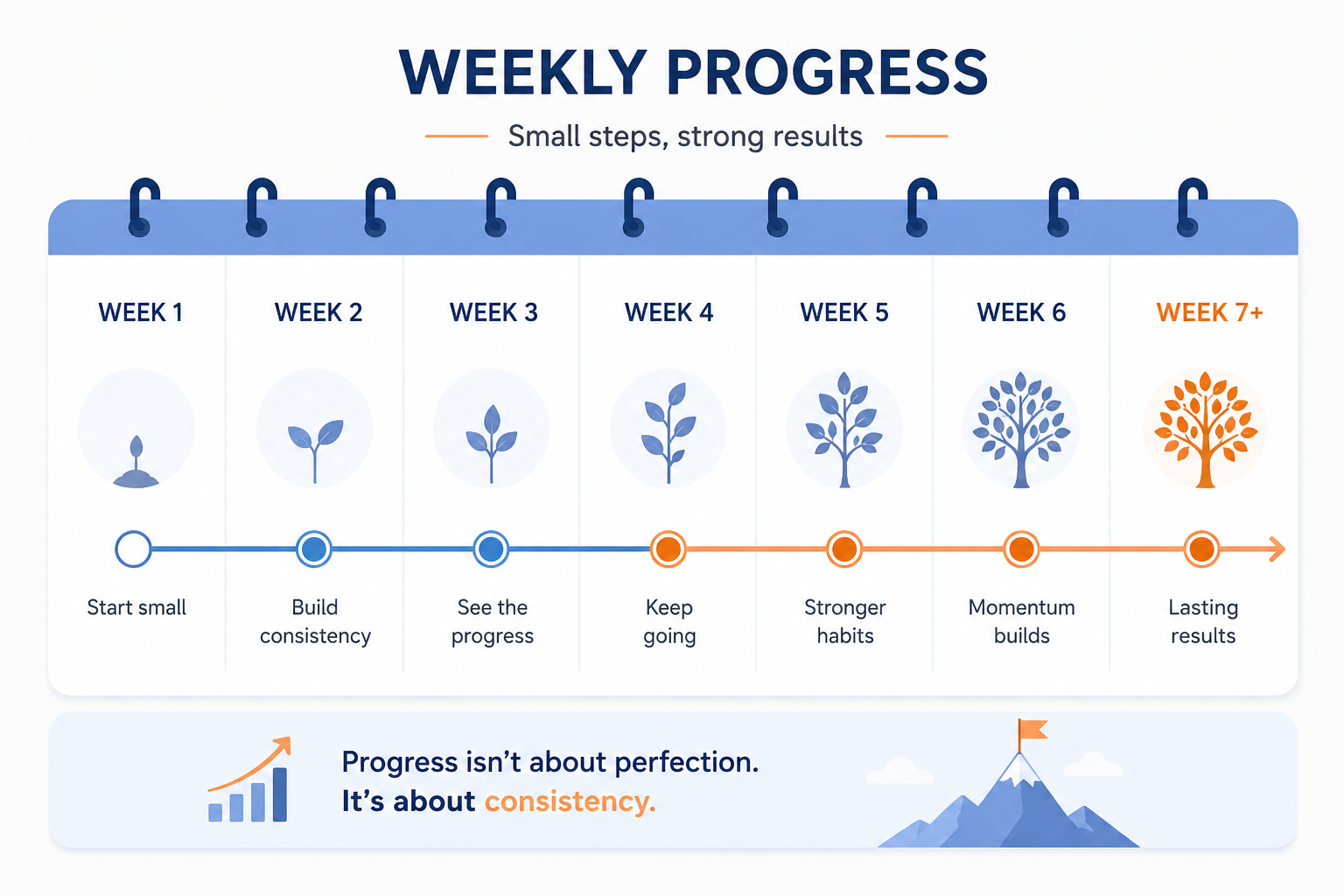
There’s no fixed timeline, and any claim otherwise oversimplifies things. Progress depends on several interacting factors:
- Current fitness level — a background in other cardio activities tends to accelerate early running gains.
- Running frequency — three consistent weekly runs generally outpaces one inconsistent one.
- Training consistency — steady, moderate effort compounds more reliably than sporadic intensity.
- Recovery quality — inadequate rest can stall progress even with well-structured training.
- Nutrition and hydration — chronic under-fueling makes every run feel disproportionately hard.
- Sleep — poor sleep quietly undermines the physiological adaptations training is meant to trigger.
- Previous running experience — returning runners typically regain fitness faster than newcomers build it.
- Training intensity — excessive intensity can slow progress by raising injury risk and fatigue.
Many people notice runs starting to feel more manageable within a few weeks. More substantial, lasting endurance gains typically take a few months of consistent effort. Patience isn’t a throwaway suggestion here — it’s structurally part of how increasing running stamina actually works.
Beginner Running Plan to Build Stamina
This sample week is a starting framework, not a rigid prescription. Scale it to your current ability, and repeat a week if you need more time before progressing.
| Day | Focus | Details |
|---|---|---|
| Monday | Easy Run | 20–25 minutes, conversational pace |
| Tuesday | Strength Training | 20–30 minutes bodyweight work (squats, lunges, planks) |
| Wednesday | Rest or Light Cross-Training | Gentle walk, easy cycling, or full rest |
| Thursday | Run-Walk Intervals | 4 minutes running, 1 minute walking, repeated for 20–25 minutes |
| Friday | Rest | Full recovery day |
| Saturday | Longer Run | 25–35 minutes, easy pace, slightly longer than other runs |
| Sunday | Optional Light Activity | Relaxed walk, stretching, or full rest |
As this becomes manageable over two to three weeks, extend the easy runs and long run by a few minutes at a time rather than jumping to a significantly longer distance all at once.
Common Mistakes That Prevent Better Running Stamina
- Running too fast on every session. Most weekly mileage should feel easy, not impressive.
- Increasing mileage too quickly. Sudden jumps are a leading cause of overuse injuries, which set stamina back further than slow growth ever would.
- Skipping recovery entirely. Rest isn’t the absence of training — it’s part of it.
- Running through pain. Mild fatigue is normal; sharp or persistent pain deserves attention, not persistence.
- Neglecting strength training. Cardio alone builds part of the picture; muscular support maintains form as fatigue sets in.
- Inconsistent hydration or nutrition. Under-fueling makes even well-planned training feel unnecessarily hard.
- Training inconsistently. Long gaps force partial re-adaptation each time, slowing overall progress.
- Comparing your progress to other runners. Starting points and adaptation speeds differ; comparison tends to discourage more than motivate.
“The runner who finishes strong months from now is rarely the one who trained the hardest today. It’s the one who kept showing up on the boring days.”
How to Know Your Running Stamina Is Improving

Progress isn’t always obvious day to day, but a few signs tend to show up reliably:
- The same route that used to feel brutal now feels noticeably easier.
- Breathing stays more controlled at a pace that used to leave you gasping.
- Recovery between runs is faster, with less next-day soreness.
- Walking breaks become shorter or less frequent.
- Easy runs genuinely start to feel easy, not just tolerable.
- Longer sessions become comfortably achievable rather than daunting.
Noticing even one or two of these is a real sign your training is working, even before your pace has changed dramatically.
A Note on Safety
Building running stamina should be a gradual process. Increasing distance or intensity too quickly is one of the most common causes of running-related injuries. If you experience persistent pain, unusual symptoms, dizziness, chest discomfort, or anything outside the range of normal exercise fatigue, stop running and consult a qualified healthcare professional before continuing training. This article is intended for general informational purposes and isn’t a substitute for personalized medical or coaching advice.
Frequently Asked Questions
How can I increase my running stamina quickly?
There’s no genuine shortcut, but the fastest sustainable progress comes from consistent easy-paced running, gradual distance increases, and solid sleep and nutrition habits alongside training.
How long does it take to build running stamina?
It varies by individual, though many notice runs feeling more manageable within a few weeks, with more substantial gains typically developing over a few months of consistent training.
How can beginners run longer without getting tired?
Slowing your pace, using run-walk intervals, and increasing distance gradually are the most reliable strategies for running longer without hitting a wall early.
Should I run every day to increase stamina?
Not necessarily. Three to four runs a week, paired with rest or cross-training days, often builds stamina more effectively than daily running, which raises injury risk without adequate recovery.
Does strength training improve running endurance?
Yes. Stronger legs and core muscles help maintain form as fatigue builds, which can delay the point where running starts to feel exhausting.
What should I eat before a long run?
A light, easily digestible carbohydrate-focused snack roughly one to two hours beforehand works well for most runners, though it’s worth experimenting to find what suits you specifically.
Is interval training good for running stamina?
Yes, when used as an addition to a solid aerobic base rather than a replacement for easy running — intervals improve cardiovascular capacity and running economy.
How many days a week should I run to improve endurance?
Three to five days a week is reasonable for most people building stamina, with the exact number depending on fitness level, recovery capacity, and schedule.
