


Walk into any gym long enough and you’ll hear someone mention their “push day” or “leg day.” That’s the Push Pull Legs system at work, and it’s become one of the most trusted training structures in strength sports for a good reason: it just makes sense. A PPL weekly workout schedule organizes your training around movement patterns rather than random body parts, which means every muscle gets hit with purpose and every session has a clear job to do.
If you’ve been bouncing between workout plans, skipping muscle groups, or just not seeing the results your effort deserves, a Push Pull Legs split might be the structure you’re missing. This guide breaks down exactly how to build a PPL weekly routine — whether you’re training three days a week or six — with real workout tables, rest-day guidance, and progression strategies you can actually stick to.
What Is a PPL Workout Split?
PPL stands for Push, Pull, Legs — three training categories based on how your muscles function during movement.
- Push muscles (chest, shoulders, triceps) work when you’re pressing weight away from your body.
- Pull muscles (back, biceps, rear delts) work when you’re pulling weight toward your body.
- Legs covers everything below the waist — quads, hamstrings, glutes, and calves.
Instead of training “chest and back” or doing a full-body workout every session, a PPL workout split groups exercises by their movement pattern. This keeps related muscles working together, so you’re not, say, training triceps hard on Monday and then asking them to help stabilize a heavy bench press two days later when they’re still recovering.
It’s a system that’s been used by bodybuilders and strength athletes for decades because it scales well. You can run it three days a week as a part-time commitment or six days a week as a serious hypertrophy program — same logic, different dosage.
How the Push, Pull, and Legs Split Works
The genius of this split isn’t really about the exercises themselves — it’s about recovery management. Muscles need roughly 48 hours to recover from a hard training session before they’re ready to be pushed again. When you group movements by function, you naturally build that recovery window into your week without having to think about it.
Here’s the practical breakdown:
Push day typically includes bench press variations, overhead pressing, dips, and tricep isolation work.
Pull day covers deadlifts, rows, pull-ups or lat pulldowns, and bicep curls.
Leg day hits squats, lunges, hamstring curls, and calf raises.
Because push muscles rarely interfere with pull muscles, and legs are their own separate system entirely, you can train frequently without constantly feeling beat up. That’s the real appeal of a Push Pull Legs workout — it lets you train hard and often while still giving each muscle group real time to rebuild.
The Best PPL Weekly Workout Schedule
There’s no single “best” PPL weekly routine — the right one depends on your schedule, recovery capacity, and goals. That said, most lifters fall into one of two camps: those who want a manageable three-day-a-week structure, and those chasing faster growth with a six-day commitment.
Both are legitimate. A 3 day PPL workout is often better for beginners, people with busy schedules, or anyone easing back into training. A 6 day PPL workout suits intermediate to advanced lifters who can recover quickly and want to maximize training frequency per muscle group.
The table below shows how each structure typically lays out across the week.
| Day | 3-Day PPL Schedule | 6-Day PPL Schedule |
|---|---|---|
| Monday | Push | Push |
| Tuesday | Rest | Pull |
| Wednesday | Pull | Legs |
| Thursday | Rest | Push |
| Friday | Legs | Pull |
| Saturday | Rest | Legs |
| Sunday | Rest | Rest |
3-Day PPL Schedule
This version is ideal if you’re new to structured training or juggling work, family, and life around the gym. You train each muscle group once per week with a full rest day between sessions, which keeps soreness manageable and recovery generous.
It won’t build muscle as fast as a higher-frequency approach, but consistency beats intensity every time — and a 3 day PPL workout is far easier to stick to long-term than a six-day plan you’ll burn out on by week three.
6-Day PPL Schedule
Running the PPL cycle twice through the week means each muscle group gets trained twice, which research generally associates with better hypertrophy outcomes than once-weekly training. This is the version most commonly used by people specifically chasing a PPL workout for muscle growth.
The trade-off is obvious: six days is a real commitment. You need solid sleep, dialed-in nutrition, and the discipline to actually take that seventh day off. Push through fatigue without recovering properly on this schedule, and you’ll stall out or get hurt — not grow faster.
Example Push Workout
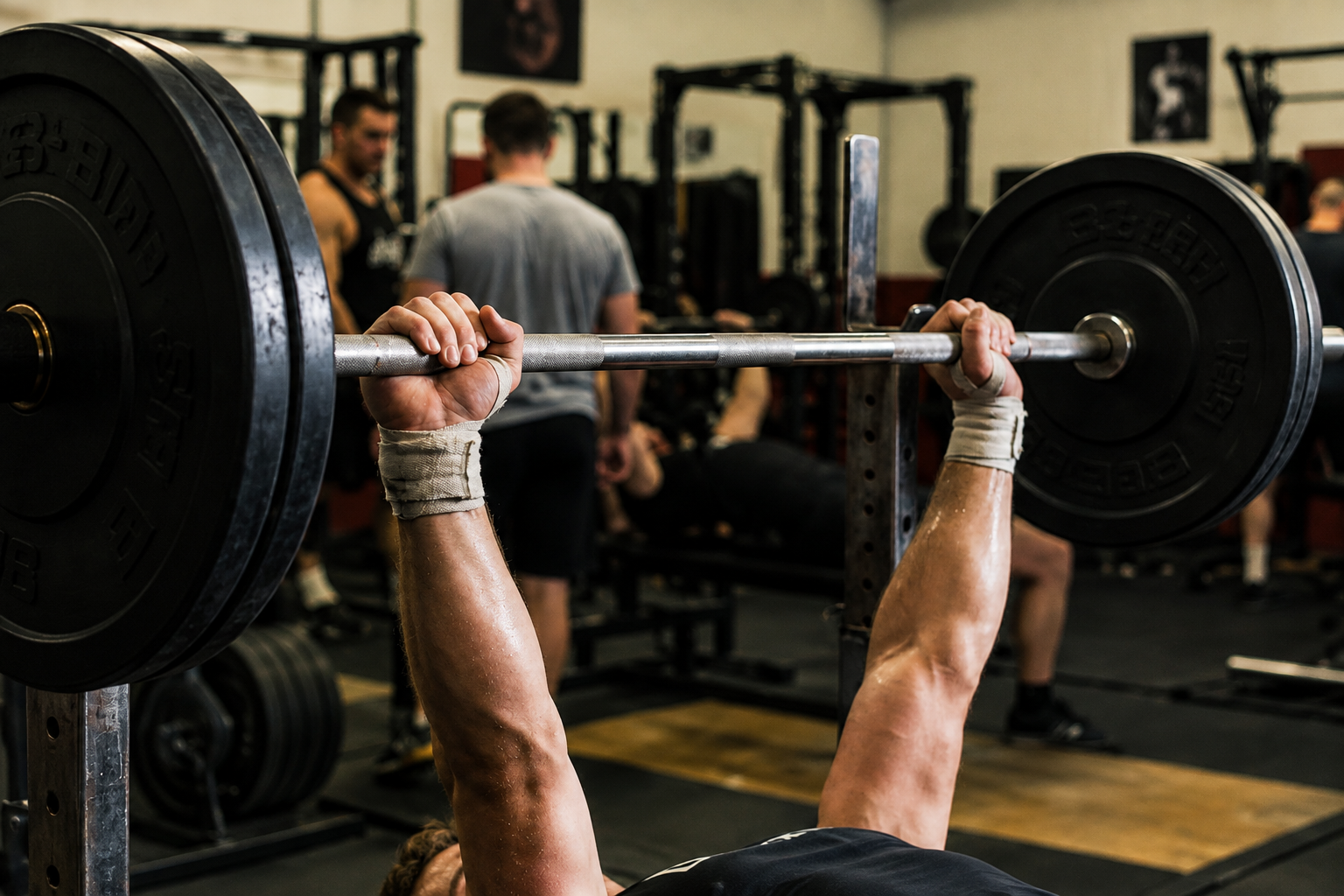
Push day trains chest, shoulders, and triceps through pressing and extension movements.
| Exercise | Sets | Reps | Rest Time |
|---|---|---|---|
| Barbell Bench Press | 4 | 6–8 | 2–3 min |
| Seated Dumbbell Shoulder Press | 3 | 8–10 | 90 sec |
| Incline Dumbbell Press | 3 | 10–12 | 90 sec |
| Cable Lateral Raise | 3 | 12–15 | 60 sec |
| Tricep Rope Pushdown | 3 | 10–12 | 60 sec |
| Overhead Tricep Extension | 2 | 12–15 | 60 sec |
Start with the heaviest compound lift — the bench press — while you’re fresh, then move into shoulder work and finish with isolation exercises for the triceps. This order lets you lift the most weight when it matters most for strength gains.
Example Pull Workout
Pull day targets your back thickness, back width, and arm flexors.
| Exercise | Sets | Reps | Rest Time |
|---|---|---|---|
| Deadlift | 3 | 5–6 | 3 min |
| Pull-Ups or Lat Pulldown | 4 | 8–10 | 90 sec |
| Barbell or Dumbbell Row | 3 | 8–10 | 90 sec |
| Face Pulls | 3 | 12–15 | 60 sec |
| Barbell or Dumbbell Curl | 3 | 10–12 | 60 sec |
| Hammer Curl | 2 | 12–15 | 60 sec |
Deadlifts are demanding on your central nervous system, so they belong at the start of the session. Rowing movements build the mid-back thickness that most lifters neglect, and face pulls are worth the minute they cost you — they keep your shoulders healthy over the long run.
Example Legs Workout
Leg day is often the one people skip. Don’t be that person — leg training drives a huge amount of overall muscle growth and strength.
| Exercise | Sets | Reps | Rest Time |
|---|---|---|---|
| Barbell Back Squat | 4 | 6–8 | 2–3 min |
| Romanian Deadlift | 3 | 8–10 | 90 sec |
| Leg Press | 3 | 10–12 | 90 sec |
| Walking Lunges | 3 | 10–12 per leg | 60 sec |
| Leg Curl | 3 | 12–15 | 60 sec |
| Standing Calf Raise | 4 | 12–15 | 45 sec |
Squats come first for the same reason deadlifts lead pull day — they demand the most energy and focus. Romanian deadlifts pick up where squats leave off, loading the hamstrings and glutes through a different movement pattern entirely.
How Many Rest Days Should You Take?
PPL rest days aren’t optional extras — they’re part of the program, not a break from it. Muscle doesn’t grow during your workout; it grows during recovery, when your body repairs the microscopic damage training causes.
On a 3-day PPL schedule, you’ll naturally get four rest days a week, which is generous and forgiving for anyone still building the habit of consistent training.
On a 6-day PPL workout, you typically take just one full rest day. That single day matters more than it looks like it should. Skipping it because you feel fine is one of the fastest ways to end up overtrained, run-down, and losing motivation.
A simple rule: if your lifts are stalling, your sleep is suffering, or you’re constantly sore in a way that doesn’t fade, add a rest day before you add more volume.
PPL Schedule for Beginners
If you’re new to lifting, resist the urge to jump straight into a six-day split because it looks more “serious.” A beginner PPL workout should prioritize learning proper form and building a consistent habit over maximizing volume.
Start with the 3-day PPL schedule. Focus on:
- Learning the mechanics of each major lift before adding heavy weight
- Leaving 2–3 reps “in the tank” rather than training to failure every set
- Tracking your weights so you can see progress week to week
Once you can complete every session with good form and you’re recovering well between workouts — usually after 8 to 12 weeks — you’ll be in a much better position to consider adding training days.
PPL Schedule for Muscle Growth
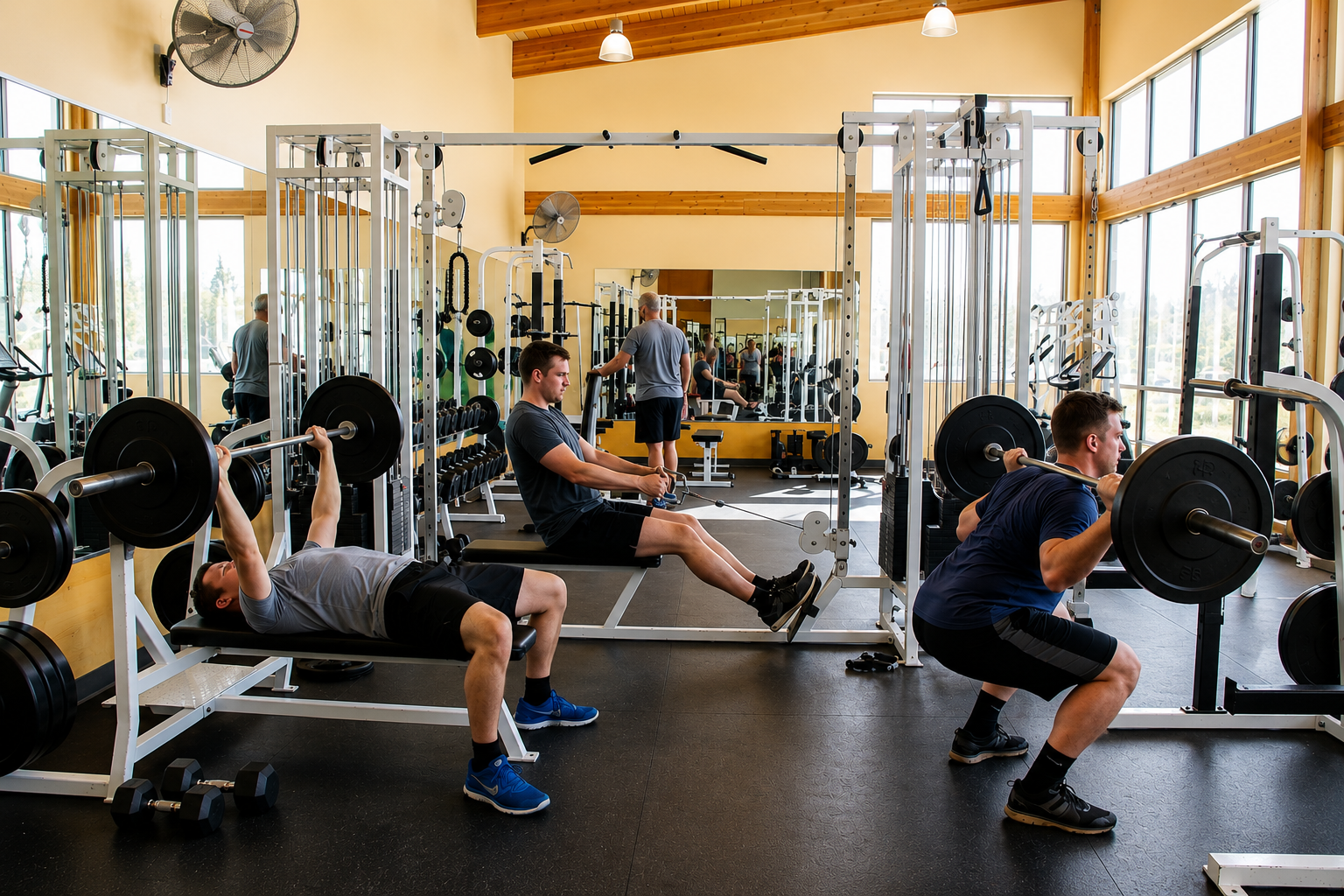
For lifters specifically chasing hypertrophy, the 6-day PPL workout tends to outperform the 3-day version simply because you’re training each muscle group twice weekly instead of once. More frequent stimulus, spread across the week, generally produces better growth than cramming all the volume into a single weekly session per muscle.
That said, a PPL workout for muscle growth isn’t just about showing up six days a week. Three things matter more than the schedule itself:
- Progressive overload — gradually increasing weight, reps, or sets over time
- Sufficient volume — enough total sets per muscle group per week (roughly 10–20 depending on experience)
- Proximity to failure — training hard enough that the last few reps of a set genuinely challenge you
Get those three right, and the exact schedule becomes a secondary detail.
How to Progress With a PPL Workout
Progressive overload is the mechanism that actually drives muscle and strength gains — everything else in this article is just the delivery system for it.
The simplest way to progress is adding small amounts of weight to the bar every week or two, as long as your form holds up. When you can’t add weight, add a rep instead. When you’ve maxed out a comfortable rep range, that’s your cue to bump the weight and drop back down in reps.
Keep a simple log — a notes app works fine — of what you lifted last time for each exercise. Walking into the gym without knowing your previous numbers is one of the most common reasons people plateau without realizing it.
Common PPL Training Mistakes
A few patterns show up again and again with lifters running this split:
- Skipping leg day. It happens more than anyone admits, and it creates an obvious imbalance over time.
- Copying a 6-day plan before you’re ready. More days doesn’t help if you can’t recover from them.
- Ignoring warm-ups. Jumping straight into heavy sets increases injury risk and often means your first working set is your worst one.
- Chasing soreness instead of progress. Soreness isn’t a reliable measure of an effective workout — your numbers on the bar are.
- Neglecting weak points. If your rear delts or hamstrings are lagging, add extra sets for them rather than just repeating the same routine indefinitely.
Nutrition and Recovery Tips

Training provides the stimulus for growth, but your body actually builds new muscle during recovery — which means nutrition and sleep aren’t optional add-ons to your PPL weekly routine, they’re half the equation.
Aim to eat enough protein to support repair, generally spread across three to four meals a day rather than crammed into one sitting. Carbohydrates fuel your training sessions and help you recover between them, so don’t be afraid of them, especially around workouts.
Sleep is where the real repair work happens. Consistently getting under six hours a night will blunt your results no matter how well-designed your training split is. Treat sleep as part of the program, not something separate from it.
Call to Action
A PPL weekly workout schedule works because it respects how your body actually recovers — not because it’s trendy. Whether you start with three days a week or work up to six, the real progress comes from showing up consistently, adding a little more weight or a few more reps over time, and giving your body the rest it needs to rebuild. Pick the schedule that fits your life right now, write down your first week’s numbers, and get started — you can always adjust the plan once you see how your body responds.
Frequently Asked Questions
What does PPL stand for in workouts?
PPL stands for Push, Pull, Legs — a training split that groups exercises by movement pattern rather than individual body parts.
Is a 3-day or 6-day PPL split better?
It depends on your goals and recovery capacity. A 3-day PPL schedule suits beginners and busy schedules, while a 6-day version generally produces faster results for intermediate and advanced lifters who can recover from the added frequency.
How long should a PPL workout be?
Most sessions run 45 to 75 minutes, depending on how many exercises and sets you include and how long you rest between them.
How many rest days does PPL require?
On a 3-day schedule you’ll get about four rest days a week; on a 6-day schedule, typically just one — though you can add more if you’re not recovering well.
Do I need a gym to follow a PPL routine?
A gym with barbells, dumbbells, and basic machines makes it easier to load exercises progressively, but a well-equipped home gym can also work with the right equipment.
Should I do cardio alongside a PPL program?
Light to moderate cardio on rest days or after lifting sessions is fine for most people and won’t meaningfully interfere with muscle growth if kept in check.
What if I miss a day on my PPL schedule?
Simply continue where you left off rather than trying to cram two sessions into one day — consistency over the following weeks matters far more than any single missed workout.
