


A few years ago, most gyms fell into one of two camps: the strength crowd chasing heavier lifts, and the endurance crowd chasing longer runs. Hybrid athlete training grew out of the space between those two camps — people who didn’t want to choose.
At its core, hybrid athlete training means building a body that can lift heavy, run far (or fast), and recover well enough to keep doing both. It’s not a single workout style. It’s an approach to programming that respects the demands of strength work and cardiovascular conditioning at the same time, instead of treating them as competing priorities.
This guide walks through what hybrid training actually involves, how to structure a week around it, and where people commonly go wrong when they try to do too much, too fast.
What Is Hybrid Athlete Training?
Hybrid athlete training is a method of combining strength training and endurance training within the same program, with the goal of improving both qualities together rather than sacrificing one for the other.
A hybrid athlete might squat and deadlift on Monday, run intervals on Wednesday, and do a longer steady-state run on Saturday — all while following a structured plan that manages fatigue across the week. The sport of Hyrox, along with obstacle course racing and CrossFit-style competitions, has pushed hybrid training into the mainstream, but you don’t need to compete in anything to benefit from the approach.
Hybrid Training vs. Traditional Single-Focus Training
Traditional programs are built around one primary goal — a powerlifter trains to move maximum weight, a marathoner trains to run efficiently for hours. Hybrid training accepts a trade-off: you likely won’t out-squat a dedicated powerlifter or out-run a dedicated marathoner, but you build a broader base of strength and endurance training that carries over to general athletic performance, daily function, and long-term durability.
Why Combine Strength and Endurance Training?
For a long time, conventional wisdom held that strength and endurance training interfere with each other — a concept known in exercise science as the “interference effect.” Doing a lot of endurance work was thought to blunt strength and muscle gains, and vice versa.
That effect is real, but it’s smaller and more manageable than it once seemed, especially for people who aren’t training at an elite competitive level. With smart programming — separating hard sessions, managing weekly volume, and prioritizing recovery — most people can make meaningful progress in both strength and endurance training at the same time.
The bigger reason to combine them, though, isn’t just physiological. It’s practical. Pure strength training can leave cardiovascular fitness underdeveloped. Pure endurance training can leave you weak, with a higher risk of overuse injuries from repetitive movement without the muscular support to handle it. Hybrid training closes both gaps.
Benefits of Hybrid Athlete Training
- Broader athletic performance. You’re building capacity across strength, power, and cardiovascular systems instead of just one.
- Better body composition support. Strength training preserves and builds muscle, while endurance work supports cardiovascular health and calorie expenditure.
- Reduced injury risk over time. Stronger muscles, tendons, and connective tissue help the body handle the repetitive stress of running and conditioning work.
- More sustainable training. Alternating between strength and cardio-focused sessions can reduce the mental burnout that comes from doing the same type of training every day.
- Real-world function. Being able to lift, carry, run, and move under fatigue is a more complete picture of fitness than any single metric.
None of this means hybrid training is automatically superior to specialized training if your goal is a specific performance outcome, like qualifying for a marathon or hitting a competitive powerlifting total. It’s best suited to people who want well-rounded fitness and performance, not a single maximal outcome.
How to Build a Hybrid Training Program
A good hybrid athlete training program is built around a few core principles rather than a rigid template.
Start With Your Priority
Even within hybrid training, it helps to decide whether strength or endurance is your primary focus for a given training block. Trying to maximize both at once, indefinitely, usually means neither improves as quickly as it could. Many hybrid athletes cycle through blocks — a few months leaning more toward strength, followed by a block leaning more toward endurance.
Separate Competing Sessions
Where possible, avoid doing a heavy lower-body strength session and a hard interval run on the same day. If your schedule forces both into one day, separate them by several hours, and do strength training first if performance in that session matters more that day.
Apply Progressive Overload to Both Sides
Progressive overload — gradually increasing the demands placed on your body over time — applies to endurance training just as much as strength training. That might mean adding weight to your lifts, but it also means increasing your running volume, pace, or interval intensity gradually, not all at once.
Track Training Load, Not Just Workouts
Training load management means paying attention to your total weekly stress, not just individual sessions. A hard leg day followed by a hard run the next day can add up to more fatigue than either session looks like on paper. Tracking how you’re recovering — sleep quality, resting heart rate, general soreness — helps you catch overtraining before it becomes an injury.
Strength Training for Hybrid Athletes
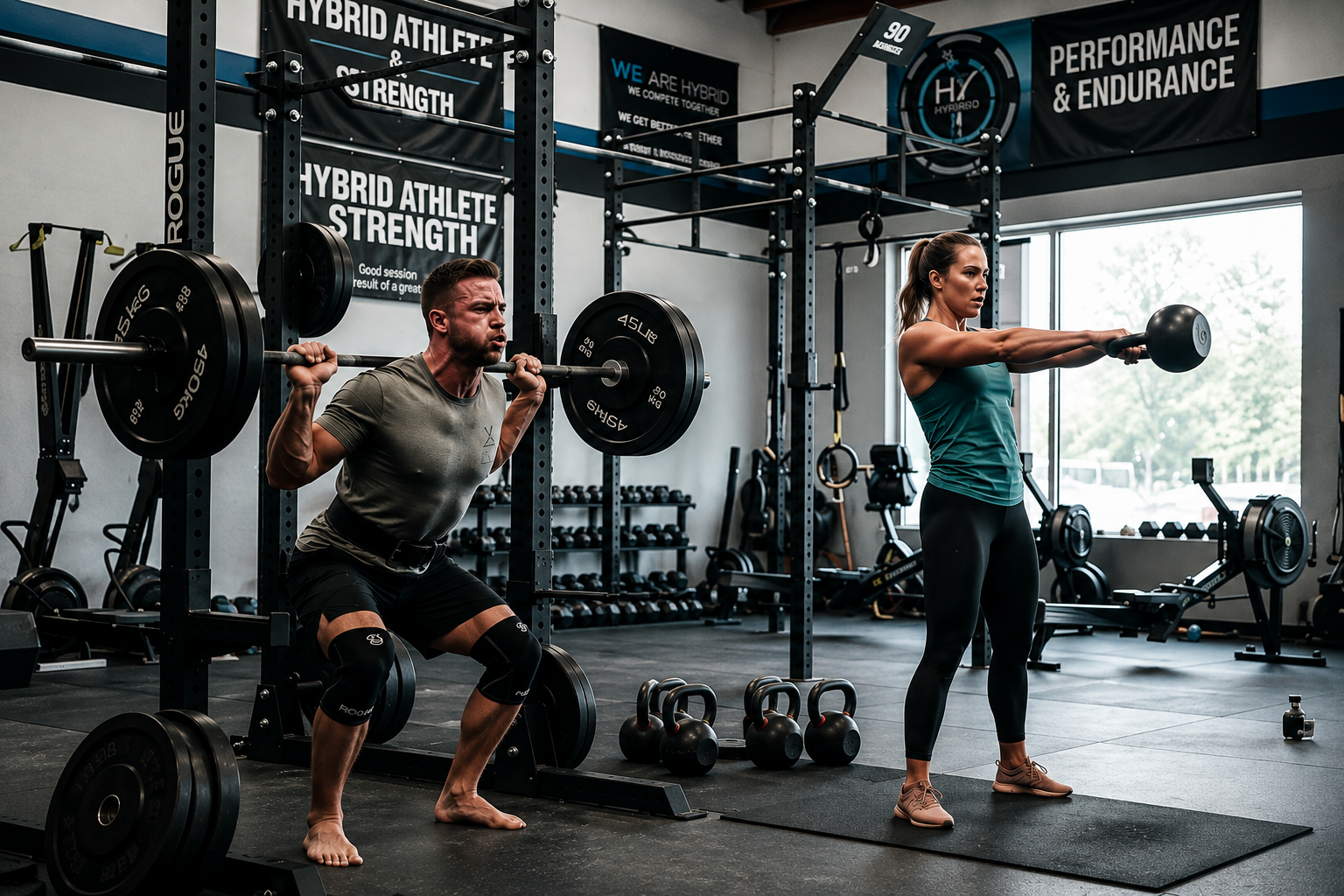
Strength training for athletes in a hybrid program doesn’t need to be complicated. The goal is building a strength base that supports endurance performance and reduces injury risk, not chasing one-rep maxes every week.
Prioritize:
- Compound lifts — squats, deadlifts, presses, and rows that train multiple muscle groups and movement patterns at once
- Lower-body and posterior chain strength — directly supports running mechanics and reduces common overuse injuries
- Core and single-leg stability work — improves running economy and balance under fatigue
- Moderate rep ranges — training in the 5–10 rep range most weeks builds strength without leaving you too fatigued for endurance sessions
Two to three strength sessions per week is a reasonable target for most hybrid athletes. More than that starts to compete heavily with recovery capacity for endurance training.
Endurance Training for Hybrid Athletes
Endurance training in a hybrid program should include a mix of intensities, not just one pace run over and over.
- Easy aerobic runs — the majority of your running volume should be at a conversational pace; this builds your aerobic base without adding excessive fatigue
- Interval or tempo work — one harder session per week improves speed, lactate threshold, and conditioning
- Long steady-state sessions — build aerobic endurance and mental resilience, useful even if you’re not training for a specific race
How to Balance Running and Strength Training
Balancing running and strength training comes down to sequencing and volume, not choosing one over the other. A few practical guidelines:
- Schedule hard running days and heavy lifting days on separate days when possible
- If combining them in one day, do strength training first if strength is your priority, or run first if the run is the harder, more important session that day
- Keep at least one full day of true rest or active recovery each week
- Reduce running volume slightly during heavier strength blocks, and vice versa
Weekly Hybrid Athlete Training Schedule
Here’s a practical, beginner-friendly example. Adjust volume and intensity based on your experience level and recovery capacity.
| Day | Focus | Example Session |
|---|---|---|
| Monday | Strength (Lower Body) | Squats, Romanian deadlifts, lunges, core work |
| Tuesday | Endurance (Easy Run) | 30–40 minute easy-paced run |
| Wednesday | Strength (Upper Body) | Bench press, rows, overhead press, accessory work |
| Thursday | Endurance (Intervals) | 6–8 x 400m at hard effort with recovery jogs |
| Friday | Active Recovery | Mobility work, light walk, stretching |
| Saturday | Endurance (Long Run) | 60–90 minute steady-paced run |
| Sunday | Full Rest | Complete rest or gentle stretching |
This schedule balances three strength-adjacent or strength sessions with three endurance sessions and one full rest day. Beginners can reduce running duration and lifting volume in each session while keeping this general structure.
Recovery and Rest Days
Recovery for athletes training a hybrid program matters more than in single-focus training, simply because you’re placing demands on more systems throughout the week.
Practical recovery habits that make the biggest difference:
- Prioritizing 7–9 hours of sleep, especially during heavier training weeks
- Including at least one full rest day weekly, with no structured training
- Using active recovery — walking, light mobility work, easy stretching — on lighter days instead of skipping movement entirely
- Adjusting training volume during weeks when sleep, stress, or soreness are noticeably worse than usual
Mobility and flexibility work also deserves a regular spot in a hybrid program. Running and heavy lifting both tighten muscles and reduce range of motion over time. Ten to fifteen minutes of mobility work two or three times a week helps maintain the movement quality both disciplines depend on.
Nutrition for Hybrid Athletes

Hybrid training places higher energy demands on the body than single-focus training, since you’re fueling both strength and endurance work in the same week.
General principles that apply to most hybrid athletes:
- Adequate protein to support muscle repair and growth, generally spread across meals throughout the day
- Sufficient carbohydrates to fuel both lifting sessions and endurance work, particularly around harder training days
- Consistent hydration, which becomes more important as weekly training volume increases
- Enough total calories to support recovery — under-fueling is a common reason hybrid athletes plateau or get injured
Specific nutrition needs vary significantly based on body size, training volume, and goals. A registered dietitian or sports nutritionist can help build a more precise plan if you’re training at higher volumes or preparing for a specific event.
Common Hybrid Training Mistakes
- Doing too much, too soon. Adding a full running program on top of an already demanding strength routine, without reducing volume elsewhere, is one of the fastest ways to end up injured or exhausted.
- Ignoring training load management. Treating each session as isolated, without considering the cumulative weekly stress, leads to overtraining.
- Skipping recovery days. Motivation isn’t the limiting factor in hybrid training — recovery capacity is.
- Neglecting mobility and flexibility. Skipping this work often shows up later as nagging injuries rather than immediate problems.
- Copying advanced programs as a beginner. Elite hybrid athletes’ schedules aren’t appropriate starting points for someone new to structured training.
How to Progress Safely
Progressing safely in hybrid athlete training means increasing one variable at a time rather than pushing strength and endurance training harder simultaneously.
A reasonable approach:
- Establish a baseline for a few weeks — consistent training without pushing intensity
- Increase either strength training load or running volume, not both, over a two- to four-week block
- Monitor recovery signals like sleep, soreness, and motivation
- Take a lighter week every four to six weeks to allow full recovery
- Reassess and adjust based on how your body is responding, not just how the plan looks on paper
If you’re managing an existing injury, returning from a long training break, or training for a specific competitive event, working with a qualified coach or sports physician can help you build a program suited to your specific situation rather than a generic template.
Final Thoughts
Hybrid athlete training isn’t about doing more of everything at once — it’s about building strength and endurance together in a way your body can actually recover from. Start with a realistic weekly structure, apply progressive overload to both sides of your training, and let recovery guide how quickly you push forward. Done consistently, that combination builds a level of athletic performance that single-focus training rarely reaches on its own.
Frequently Asked Questions
Q. What is hybrid athlete training?
Hybrid athlete training is a training approach that combines strength training and endurance training in the same program, aiming to build both muscular strength and cardiovascular fitness together.
Q. Can you build muscle and improve endurance at the same time?
Yes, to a meaningful degree. Progress in both may be slightly slower than focusing on just one, but with proper programming and recovery, most people can build muscle and improve endurance simultaneously.
Q. How many days a week should a hybrid athlete train?
Most hybrid athletes train five to six days a week, mixing strength and endurance sessions with at least one full rest day. Beginners can start with four training days and build up gradually.
Q. Is running bad for muscle growth?
Running itself doesn’t prevent muscle growth. High volumes of running combined with insufficient recovery or inadequate calorie and protein intake can slow muscle gains, but moderate running alongside proper strength training and nutrition is compatible with muscle growth.
Q. What’s the biggest risk with hybrid athlete training?
Overtraining is the most common risk, usually from combining high volumes of strength and endurance work without enough recovery. Managing training load and prioritizing rest days reduces this risk significantly.
Q. Can hybrid training help with injury prevention?
Yes, when programmed well. Strength training supports the muscles and connective tissue that endurance activities stress repeatedly, which can reduce the risk of common overuse injuries like runner’s knee or shin splints.
